Woke Meaning: Origin, Slang, and Modern Evolution
From a 1938 blues recording to the front pages of global newspapers, "woke" has become one of the most powerful and polarizing words of our era. This is the complete, evidence-based story behind it.
What This Guide Covers
- The authentic AAVE origin dating back to Lead Belly in 1938
- How Erykah Badu and Black Lives Matter globalized "stay woke"
- The post-2020 split that created two opposing definitions
- Understanding "too woke," "woke capitalism," and "anti-woke"
- How British and American usage differ in politics and media
- The ironic Gen Z internet culture reshaping the word today
The Linguistic Origin of "Woke"
Long before it appeared in headlines or political debates, "woke" existed as a distinctive expression within African American Vernacular English (AAVE). Grammatically, the word functions as an adjective formed from the past participle of "wake," but it carries a meaning far richer than the standard English equivalent. In AAVE, being "woke" describes a persistent, ongoing state of alertness — not a single moment of waking up, but a continuous awareness of danger and injustice.
The earliest confirmed use of "woke" in a political context appears in a 1938 recording by legendary blues musician Huddie Ledbetter, known professionally as Lead Belly. In his song about the Scottsboro Boys — nine African American teenagers falsely accused of assault in Alabama — Lead Belly urges Black travelers moving through the segregated South to "stay woke, keep your eyes open." The phrase was not metaphorical; it was practical survival advice under the brutal reality of Jim Crow laws.
Two decades later, in 1962, novelist William Melvin Kelley wrote a landmark essay for The New York Times Magazine titled "If You're Woke You Dig It." In it, Kelley documented how terms invented by Black communities were being adopted and diluted by mainstream white culture — an observation that would prove prophetic for the exact journey "woke" itself would take fifty years later.
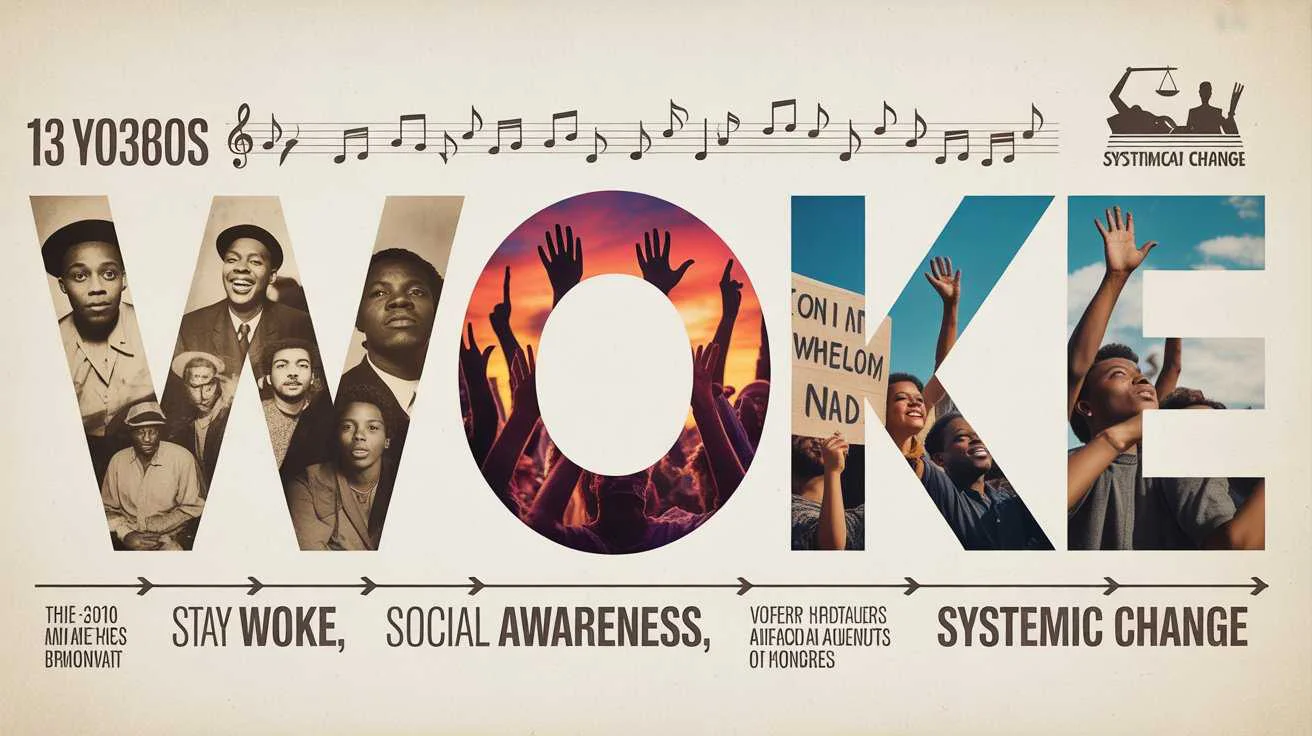
A visual timeline of the word's linguistic evolution across nearly nine decades.
How "Stay Woke" Became a Global Rallying Cry
The imperative phrase "stay woke" carries a weight that the adjective alone does not. It is a direct call to action — an instruction to maintain vigilance in the face of institutional violence and systemic bias. Throughout the twentieth century, this phrase circulated primarily within Black American communities as a form of shared knowledge, passed from one generation to the next as a survival tool.
The phrase found new life in 2008 when singer Erykah Badu released the neo-soul track "Master Teacher" from her album New Amerykah Part One (4th World War). Her repeated refrain — "I stay woke" — connected the traditional AAVE meaning with a broader spiritual and political awakening, resonating deeply with a generation coming of age in the early social media era.
Then came Ferguson. After the 2014 police shooting of Michael Brown, the hashtag #StayWoke became the digital rallying cry of the Black Lives Matter movement. Within just two years, the phrase went from an insider expression to one of the most searched terms on Google, catapulting "woke" into the global mainstream.
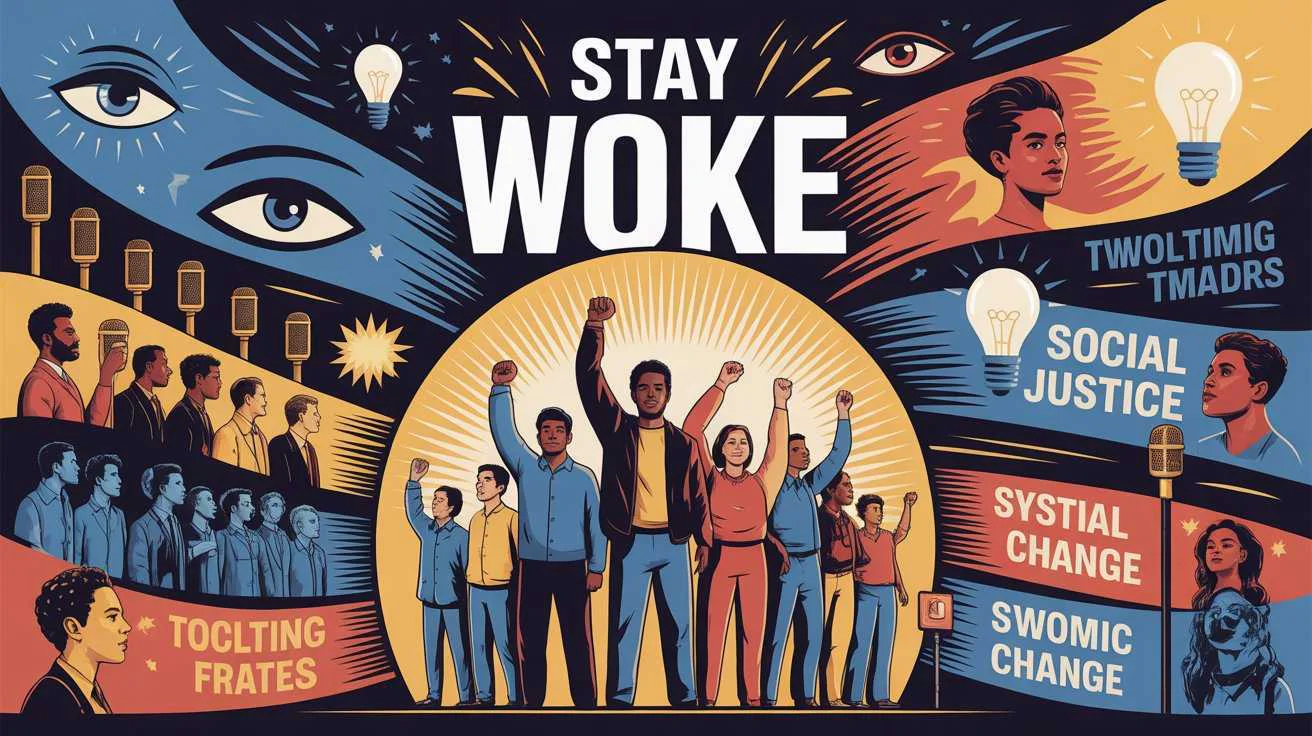
The transformation of "stay woke" from community warning to global movement.
"When a word travels from one community to the entire world, it inevitably carries some of its original meaning — and inevitably loses some of it too."
From AAVE to the Mainstream Dictionary
The journey of "woke" from a community-specific term to a globally recognized word follows a well-documented linguistic pattern called "semantic broadening." When a word moves from a small, tight-knit speech community into general usage, it tends to lose its original specificity and expand to cover a wider range of ideas.
In the case of "woke," this happened remarkably quickly. Between 2015 and 2018, major dictionaries including the Oxford English Dictionary and Merriam-Webster added or updated their entries for the word, formally recognizing it as standard English.
This mainstreaming process was not without tension. Linguists and cultural commentators pointed out that when the word was adopted by speakers outside its original community, it often lost its historical weight and took on a more performative quality.
The Everyday Slang Meaning of "Woke"
Away from political debates and dictionary definitions, "woke" is often used in everyday conversation with a much simpler meaning. Among friends, colleagues, and family members, calling someone "woke" can mean little more than saying they are perceptive, well-informed, or genuinely paying attention.
A person might be called "woke" for spotting a hidden fee in a contract, recognizing a manipulative marketing tactic, or understanding the deeper meaning of a joke.
The Political Polarization Since 2020
If the 2010s were the decade when "woke" entered the mainstream, the 2020s are the decade when it split into two opposing meanings. Following the global protests after the murder of George Floyd in May 2020, the word became a battleground term claimed by both progressive and conservative movements.
For supporters of progressive causes, "woke" remained a positive self-identification. For critics on the conservative side, "woke" became a catch-all pejorative describing what they saw as ideological overreach, performative activism, and excessive identity politics.
The result is a word that now functions less as a neutral descriptor and more as a political signal.
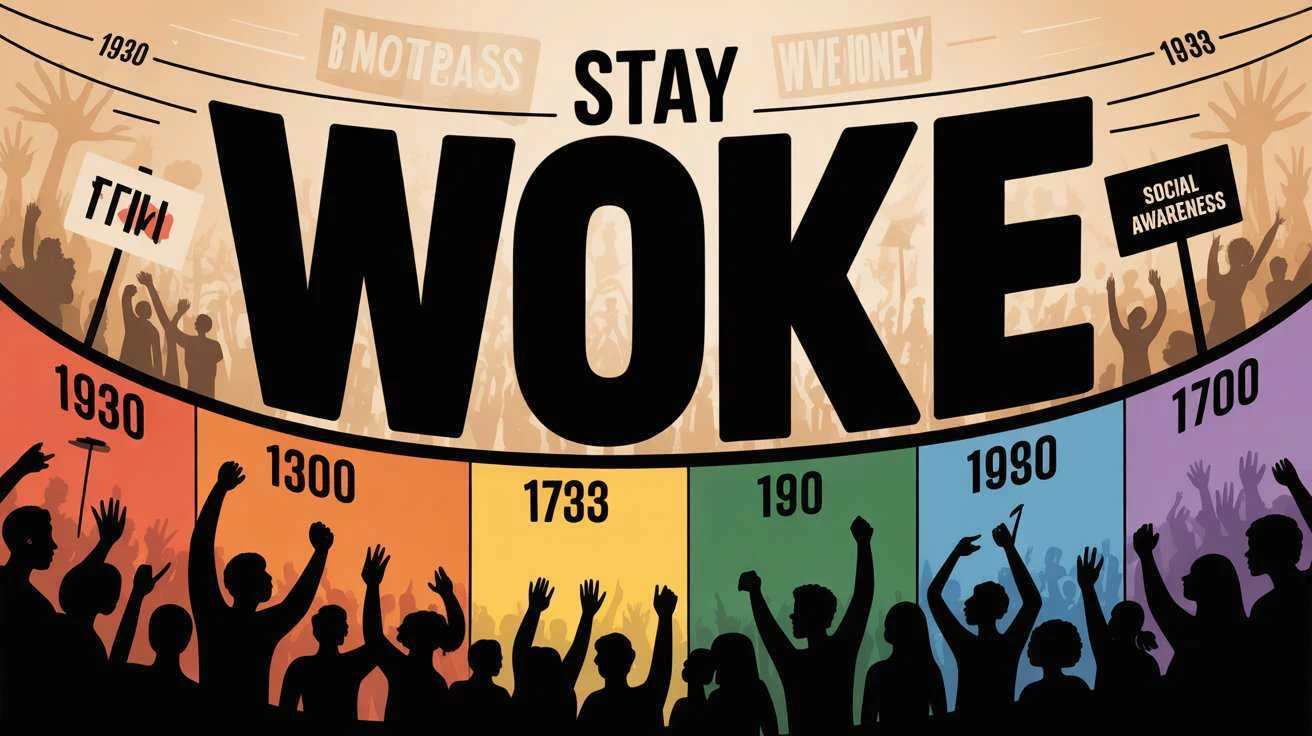
The post-2020 political split created two contrasting definitions of a single word.
Understanding "Too Woke" and "Woke Capitalism"
The phrase "too woke" is used almost exclusively by critics who feel that social awareness has crossed into excess or absurdity. Supporters of the underlying causes push back on this framing, arguing that the threshold for "too woke" is subjective.
"Woke capitalism" describes corporations adopting social justice language in marketing and branding. Critics on both sides often find these gestures problematic.
How "Woke" Is Used in the United Kingdom
British usage of "woke" mirrors the American split but focuses more on the legacy of the British Empire, institutions like the BBC and the National Trust, and the teaching of colonial history in schools.
The term gained major traction in UK political discourse around 2020 and 2021, often framed as an imported American culture war reshaping British public life.
British and American usage of "woke" reflects different cultural anxieties.
Gen Z, Irony, and Internet Culture
Among users born after 1997, "woke" occupies a complicated and often ironic space. On TikTok, Instagram, and X, younger creators frequently use the word in memes and satirical posts that mock performative social awareness.
This ironic usage does not replace the serious political meaning; the two coexist, sometimes within the same conversation.
The Rise of "Anti-Woke" Movements
"Anti-woke" has evolved from a casual descriptor into a formal political identity and, in several countries, a legislative agenda targeting DEI offices and classroom discussions of race and gender.
The position has also gained traction in the United Kingdom, France, Brazil, and Australia.
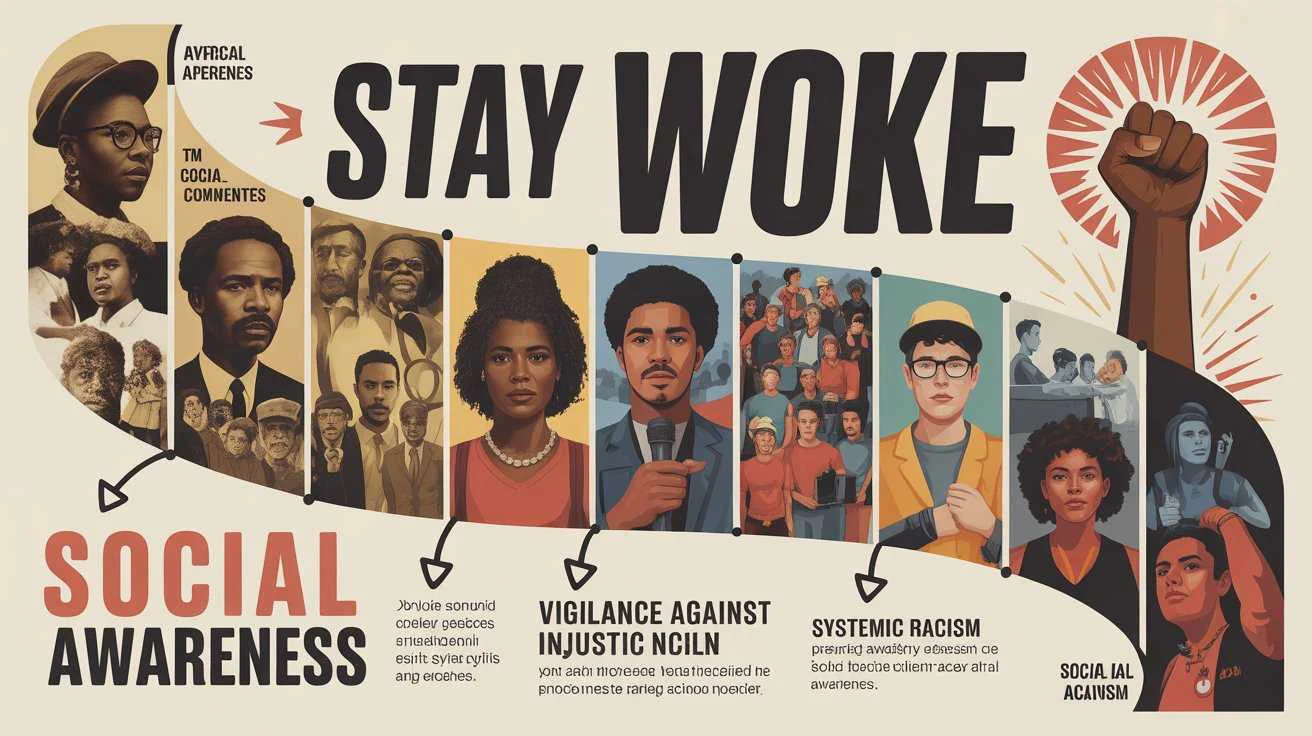
Emerging internet variants continue to reshape how the word is used online.
Woke Meaning at a Glance
| Usage | Core Meaning | Typical Context |
|---|---|---|
| Original AAVE | Alert to real dangers of racial injustice | Black communities under Jim Crow |
| "Stay Woke" | Direct call to remain vigilant | BLM activism, post-2014 digital era |
| Dictionary Sense | Aware of social and political inequalities | Mainstream journalism, general use |
| Casual Slang | Perceptive, informed, "switched on" | Everyday conversation |
| Progressive Label | Engaged with justice and equity movements | Activism, social media bios |
| Critical Usage | Excessive identity politics, performative activism | Conservative media commentary |
| "Too Woke" | Awareness perceived as excessive | Workplace and corporate debates |
| "Woke Capitalism" | Corporate branding using social justice themes | Marketing critique |
| UK Usage | Focused on class, immigration, and institutions | British press and politics |
| Gen Z Ironic | Satirical, meme-based, often sarcastic | TikTok, Instagram, X |
| "Anti-Woke" | Active opposition to woke ideology | Legislation, political campaigns |
Sources: Merriam-Webster, Oxford English Dictionary, and academic research on AAVE linguistics.
Frequently Asked Questions
What Does "Woke" Mean to You?
Which version of the word do you encounter most often — the original slang, the activist rallying cry, or the modern political label? Share your perspective in the comments below.