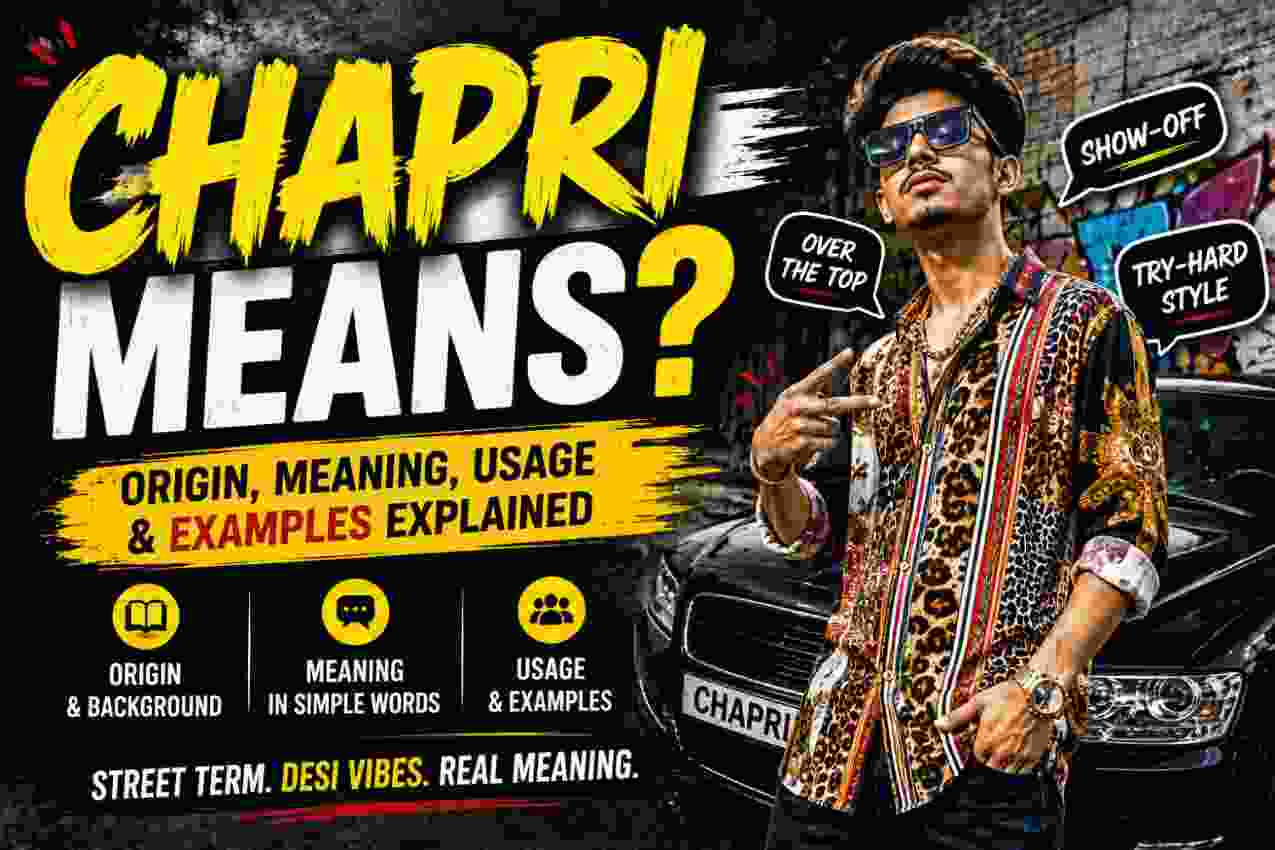
You have likely seen the word “Chapri” flooding Instagram comment sections or YouTube shorts. But what does it actually mean? The term has shifted rapidly from a severe social identifier to a broad, often mocking internet stereotype. Understanding this shift is key to navigating modern Indian digital culture. This guide breaks down the history, the fashion, and the controversy behind the label to explain exactly what Chapri means today.
What is the Origin of the Word Chapri?
To understand what chapri means, you must look at its historical roots. The term did not start on the internet. It originated within the caste system in Maharashtra.
- Historical Context: Originally, “Chapri” referred to a community traditionally involved in making bamboo baskets and roofing materials (known as chapr).
- The Social Stigma: Over time, the word was weaponized. It became a derogatory slur used by upper-caste individuals to demean those from lower-caste or Dalit backgrounds.
- The Shift: The term moved from a specific community label to a generalized insult implying someone is “low-class” or “uncivilized.”
How Did “Chapri” Become an Internet Slang?
The migration of the word from the streets to social media changed its definition. In the digital space, the caste-based origins became obscured, replaced by a judgment of aesthetics and behavior.
- TikTok and Reels: The explosion of short-form video content in India created a new type of “local influencer.”
- The Meme Culture: Meme pages began labeling creators with specific visual styles as “Chapri.”
- Detachment from Caste: Today, when a teenager uses the word, they rarely understand the casteist history; they simply mean “cringe” or “try-hard.”
The Visual Stereotype: The “Chapri” Aesthetic
When people ask what chapri means, they are often looking for a visual description. The internet has created a uniform caricature of the “Chapri” individual.
Common Visual Markers:
- Hair: The “mushroom cut” or heavily colored/dyed hair (often bright red or blonde).
- Clothing: Skinny jeans, oversized t-shirts with loud logos, and cheap white sneakers.
- Accessories: Fake gold chains, cheap sunglasses, and prominent belt buckles.
- Makeup: For men, often includes heavy foundation and defined eyebrows.
The “Chapri” Attitude and Behavior
Beyond looks, the label is applied based on specific actions. The internet associates the term with a particular performance of masculinity and swagger.
- Bike Stunts: Performing dangerous wheelies on public roads on modified motorcycles (often without helmets).
- Dialogue Delivery: Using aggressive, heavily accented Hindi or Haryanvi phrases to appear tough.
- Music Taste: Listening to loud Haryanvi rap or “desi” trap music that focuses on gangster lifestyles.
- Social Media Usage: Posting heavily edited photos with “Jai Baba Ki” or “Attitude Status” captions.
Chapri vs. Dank: What is the Difference?
To clarify what chapri means, it helps to contrast it with “Dank.” Both are internet subcultures, but they sit on opposite ends of the humor spectrum.
| Feature | Chapri (The Target) | Dank (The Critic) |
|---|---|---|
| Humor Style | Unintentionally funny, overly serious | Ironic, meta, self-aware |
| Content | Flirting, bike stunts, lip-syncing | Satire, dark humor, political memes |
| Aesthetic | Flashy, fake luxury | Minimalist, nihilistic, often dark |
| Perception | Viewed as cringe | Viewed as intellectual/elite |
Why is the Term Controversial?
You cannot discuss what chapri means without addressing the classism and casteism involved. Sociologists and cultural critics argue the meme is not harmless fun.
The Problem:
- Class Prejudice: Many behaviors labeled as “Chapri” are simply markers of lower-income, small-town youth trying to express themselves.
- Caste Erasure: While the internet uses it for fashion, the word still carries the weight of caste oppression for many communities.
- Punching Down: Critics argue that mocking “Chapris” is a way for urban, affluent youth to bully those with less access to cultural capital.
The Regional Variations of the Term
The definition of “Chapri” changes slightly depending on geography.
- Delhi NCR: Often used interchangeably with Bihari or Jamtara (in a derogatory sense against migrants).
- Maharashtra: Retains a stronger connection to the original caste slur, making it more offensive.
- South India: Used less frequently, often replaced by local slang like Pori or Bay in derogatory contexts, though “Chapri” is now gaining traction due to pan-Indian meme pages.
Reclamation or Reinforcement?
Some creators labeled as “Chapri” have attempted to reclaim the term. They argue that their content is authentic and represents the real India, not the sanitized version seen in Bollywood.
- The Argument for Reclamation: Some creators now use “Chapri” in their bios as a badge of honor, suggesting they are self-made and unbothered by elite opinions.
- The Reality: In most mainstream usage, the word remains a pejorative. It is used to silence and dismiss marginalized voices.
What Chapri Means for Indian Youth Culture
The term highlights a deep digital divide in India. It represents the clash between “Bharat” (rural/small-town India) and “India” (urban, English-speaking India).
The “Chapri” phenomenon is a visual representation of the anxiety of the middle class. As internet access became cheaper, millions of new users flooded social media. The established users, feeling their space invaded, created the “Chapri” archetype to distinguish themselves from the newcomers.
Case Study: The “Chapri” Influencer Economy
Ironically, being a “Chapri” is profitable. Hate-watching drives massive engagement.
- Engagement Bait: Creators often intentionally act “cringe” because they know it will be shared as a meme.
- Monetization: These creators often have high follower counts and secure brand deals for local products (hair oil, pan masala, energy drinks).
- The Algorithm: Social media algorithms reward controversy. The more people comment “what a Chapri,” the more the video is pushed to new feeds.
How to Use the Term Responsibly
Given the complicated history, you should think twice before using the word. Ask yourself:
- Are you referring to a specific community? If yes, you are using a slur.
- Are you mocking someone’s income level? If yes, you are engaging in classism.
- Are you criticizing a behavior (like reckless driving)? If yes, use the specific word for that behavior (“reckless,” “dangerous”) instead of “Chapri.”
The Future of the Word
Language evolves. Just as “Gay” shifted from meaning “happy” to a sexual identity, “Chapri” is currently in flux. It may eventually lose its sting and become a generic term for “uncool,” or it may remain a potent symbol of India’s caste and class divisions. Currently, understanding what chapri means requires acknowledging both its digital present and its historical past.
Frequently Asked Questions (FAQs)
Is calling someone “Chapri” offensive?
Yes. Even if you mean it as “cringe,” the word has roots as a casteist slur. Using it risks perpetuating discrimination against marginalized communities, so it is best avoided.
What exactly does chapri mean on Instagram?
On Instagram, “Chapri” typically refers to a specific aesthetic. Users apply it to men who sport dyed hair, wear skinny jeans, perform bike stunts, or post overly dramatic “attitude” reels that are viewed as tasteless.
What is the female version of Chapri?
There isn’t an exact linguistic equivalent. However, women with similar aesthetics (heavy makeup, flashy clothes, specific lip-sync styles) are often targeted with terms like “Cringe” or other gendered slurs, or also lumped under the umbrella of “Chapri” culture.
Who is the most famous “Chapri” creator in India?
Naming a specific individual is difficult as the title is subjective. However, several creators in the Haryanvi and Bhojpuri music scenes, or those famous for dangerous bike modifications, are frequently the subject of “Chapri” memes by urban meme pages.
Can a rich person be a Chapri?
In the modern internet context, yes. The term now often describes taste rather than financial status. A wealthy person who dresses in flashy, counterfeit-looking clothing and exhibits “cringe” behavior might be called “Chapri” as a critique of their style, not their wallet.
What does chapri mean in Hindi?
In contemporary Hindi slang, it translates roughly to “cringe,” “uncultured,” or “wannabe.” However, historically, it referred to a caste group involved in bamboo work, which is why the slang term is considered problematic.
Conclusion
The term “Chapri” is a complex mirror reflecting India’s class, caste, and digital divides. While many use it casually to describe someone they find cringe-worthy, the word carries a heavy history of oppression. Now that you understand what chapri means, where it comes from, and the harm it can cause, you can make an informed choice about the language you use online. Choose words that critique behavior, not identity.