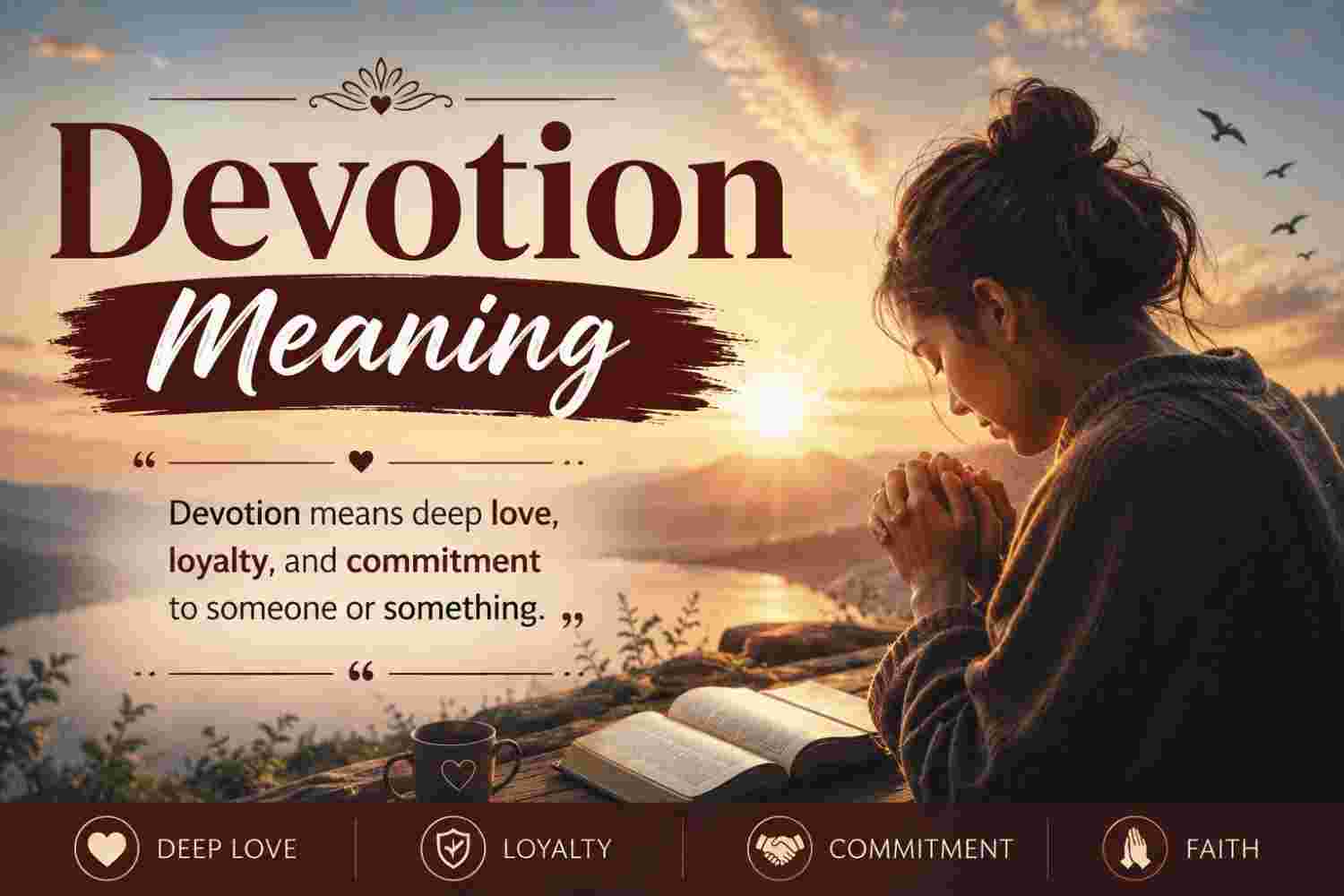
You have probably heard the word “devotion” thrown around in movies, churches, or heated arguments about relationships. Most people assume they know the devotion meaning, yet when you ask them to explain it, they stumble. They confuse it with obsession, sacrifice, or blind loyalty.
The actual devotion meaning is not about losing yourself. It is about finding a reason so compelling that your focus sharpens, your energy multiplies, and your actions align with a higher standard. If you are tired of feeling scattered, unappreciated, or stuck in superficial connections, understanding this single concept will change how you operate.
You are about to learn why most definitions get it wrong, how devotion shapes your brain chemistry, and how to harness it without burning out.
The Modern Confusion Surrounding Devotion Meaning
We live in an era of half-hearted scrolling and endless swiping. The word “devotion” has been diluted by pop culture. It is often used to describe a fan’s love for a sports team or a person’s commitment to a skincare routine. While those are valid uses, they barely scratch the surface.
The dictionary gives a dry definition: love, loyalty, or enthusiasm for a person or activity.
But real devotion is an action verb. It is not a passive feeling that washes over you. It is a deliberate choice you make every single morning.
Why Society Gets It Wrong
Society teaches us that devotion means saying “yes” to everything someone asks. We think being devoted means being available 24/7, ignoring our own needs, and putting up with toxic behavior. This is a dangerous misconception.
That is not devotion. That is codependency wearing a mask.
True devotion meaning involves boundaries. You cannot be devoted to a cause or a person if you are completely depleted. Devotion requires a full cup, not an empty one. It is the fuel that keeps you going when things get hard, not the chain that drags you down.
The Historical Evolution of Devotion
To understand the devotion meaning deeply, we have to look back. The word comes from the Latin devotio, which meant a formal vow or consecration. In ancient times, it was often a sacred promise.
Roman soldiers would sometimes perform a ritual called devotio where they dedicated themselves to the gods of the underworld in exchange for victory. It was a serious, life-or-death commitment.
Over time, the religious context softened. It moved from a physical sacrifice to a spiritual discipline. Monks practiced devotion through prayer. Artists practiced devotion through their craft. It was about dedicating time and attention to something greater than the self.
The Shift from Ritual to Relationship
In the 20th century, the devotion meaning shifted into the relational space. Songs began to describe romantic devotion. It became synonymous with fidelity. The problem is that we stopped talking about the effort required.
We started believing that devotion was a magical state of being that would just appear if we found the “right” person. When the butterflies faded, we assumed the devotion was gone. But that is simply biology.
The Psychology of Devotion: Why We Crave It
Our brains are wired for connection. Neurologically, devotion is linked to the release of oxytocin and dopamine. When we commit to something and see progress, our brain rewards us with a sense of purpose.
This is why people who are devoted to a hobby or a mission report higher levels of life satisfaction. They are not relying on a single person to fulfill their emotional needs.
Devotion vs. Obsession: A Critical Difference
You cannot talk about the devotion meaning without addressing obsession. These two are often confused.
Obsession is driven by anxiety and control. You obsess over something because you are afraid of losing it. Your thoughts become intrusive. You check your phone constantly. You feel jealous and insecure.
Devotion is driven by security and choice. You devote yourself because you want to, not because you have to. You feel a sense of peace, even when you are working hard. You can step away, refuel, and return without panic.
Exploring the 7 Deep Facets of Devotion Meaning
To master this concept, we need to break it down. There are seven distinct layers to a truly devoted life. Most people only access one or two.
1. Consistency Over Intensity
Anyone can be intense for a week. You can go to the gym every day for seven days straight. You can shower a new partner with affection for a month. That is easy because novelty is exciting.
Real devotion meaning looks boring from the outside. It is showing up on a Tuesday afternoon when you are tired. It is doing the unglamorous work when no one is watching. Consistency builds trust. Intensity builds drama.
Key Takeaways:
- Devotion is measured in years, not days.
- It is the refusal to quit when the excitement fades.
- It requires a routine, not just a feeling.
2. The Sacrifice of Attention
In 2026, attention is the most expensive currency on earth. Corporations spend billions to steal your focus. To be devoted to something means you protect your attention for that thing.
If you say you are devoted to your family but spend four hours a night scrolling through short videos, you are lying to yourself. Devotion meaning is defined by where your eyes look and where your ears listen.
3. Emotional Resilience
Devotion is not tested during the good times. It is tested during the storms. When a project fails, when a partner disappoints you, or when your faith is shaken, that is when the meaning of devotion reveals itself.
A devoted person does not run away at the first sign of trouble. They process the pain, communicate the issue, and recommit to the solution. They understand that a relationship without conflict is a relationship without truth.
4. The Power of Small Acts
We often think devotion requires grand gestures. We think of building a monument or buying a diamond. While those are nice, they are not the foundation.
The foundation is the small act. It is the cup of coffee made in the morning. It is the text message asking if you arrived safely. It is the daily prayer or the 15 minutes of writing. These small acts compound into a massive wall of trust.
5. Self-Devotion as the Foundation
You cannot pour from an empty cup. This is a cliché because it is true. If you are searching for the devotion meaning, start with yourself.
Are you devoted to your own growth? Do you keep promises you make to yourself? If you say you will go to bed early and you don’t, you are breaking trust with yourself. If you cannot trust yourself, you cannot expect others to trust you.
6. Alignment with Core Values
Devotion without ethics is dangerous. A soldier can be devoted to a corrupt regime. A lover can be devoted to a liar.
Your devotion must align with your core values. If you value honesty, you cannot be devoted to a person who lies to you. That creates cognitive dissonance, which will eventually destroy your mental health. True devotion feels light because it aligns with who you really are.
7. The Freedom of Choice
This is the highest level of devotion. It is choosing someone or something every single day.
When you realize you have a choice, and you still choose them, that is powerful. It removes the victim mentality. You are not stuck. You are here because you want to be. That conscious choice breathes life into the relationship or the craft.
How to Cultivate True Devotion in Your Life
Understanding the devotion meaning is only half the battle. You need to apply it. Here is a practical, actionable plan to build devotion without slipping into burnout.
Step 1: Audit Your Priorities
You cannot be devoted to everything. It is impossible. You have limited time and energy.
Take a piece of paper. Write down the top five things you claim you are devoted to. Now, look at your calendar and your bank statement. Does your calendar reflect those priorities? If there is a mismatch, you have identified your problem.
Step 2: Create Rituals, Not Just Goals
Goals are future-oriented. Rituals are present-oriented. Devotion lives in the present.
Instead of saying “I want to write a book,” create a ritual: “Every morning at 7:00 AM, I write 500 words.” Instead of saying “I want a better marriage,” create a ritual: “Every Friday night is date night, no exceptions.”
Step 3: Learn to Say No
The word “no” is the guardian of your devotion. Every time you say “yes” to something that doesn’t matter, you are saying “no” to the thing you care about.
This is hard. People will be upset. They will call you selfish. But you are not being selfish; you are being focused. You are protecting the sacred space where your devotion grows.
Data and Statistics: The Value of Loyalty
Numbers don’t lie. Devotion, in the context of customer loyalty and employee retention, has a massive impact on the bottom line. Understanding these numbers helps us appreciate the tangible value of commitment.
| Metric | Statistic | Implication for Devotion Meaning |
|---|---|---|
| Customer Retention | Increasing retention by 5% increases profits by 25% to 95%. (Bain & Co.) | Devotion to customers pays off more than constantly hunting for new ones. |
| Employee Turnover | Replacing an employee costs 6 to 9 months of their salary. (SHRM) | Devotion to staff culture saves massive resources and builds institutional knowledge. |
| Marriage Longevity | Couples who report “high commitment” have a 75% lower divorce rate. (NLM) | Emotional devotion is a stronger predictor of success than initial passion. |
Analysis of the Data:
These numbers tell a clear story. The devotion meaning is not just a fluffy emotional concept. It is a competitive advantage. Whether in business or love, the act of sticking with someone and fixing problems is more profitable and more fulfilling than throwing things away and starting over.
The Dark Side of Devotion
We must be honest. Devotion has a shadow. It can be weaponized.
Sometimes, people use the concept of devotion to justify staying in abusive situations. They believe that if they are just more devoted, the other person will change. This is a lie.
When to Withdraw Your Devotion
You should withdraw your devotion when:
- Respect is gone: If you are being name-called, belittled, or manipulated.
- Safety is compromised: Physical violence is an immediate deal-breaker.
- Reciprocity is dead: You are doing all the giving, and they are doing all the taking.
- Values clash: You are asked to compromise your integrity.
Devotion is a gift. You should only give it to those who treat it with care.
Frequently Asked Questions (FAQs)
What is the true devotion meaning in a relationship?
The true meaning in a relationship is the consistent choice to prioritize the well-being of the partnership and the other person, without sacrificing your own core identity. It is showing up physically and emotionally, especially during boring or difficult times.
How is devotion different from love?
Love is often a feeling; devotion is an action. You can love someone and still treat them poorly. You cannot be devoted to someone and treat them poorly. Devotion is love manifested through disciplined behavior and time.
Can you be devoted to a career?
Absolutely. Career devotion means you are dedicated to mastering your craft. You study your industry, you practice your skills, and you take pride in the quality of your work. However, it should not be an escape from your family life; it should complement it.
Is devotion a choice or a feeling?
It is primarily a choice. Feelings fluctuate. Some days you feel motivated, some days you don’t. Devotion is the discipline to act according to your values regardless of your temporary emotional state.
How do I show devotion to my partner?
You show it through undivided attention. Put the phone down. Listen to understand, not to reply. Take over a chore they hate. Show them that you see their needs and that you are willing to act to meet them.
Why is self-devotion important?
Because if you do not honor your own needs, you will eventually resent the people you are trying to help. Self-devotion ensures you remain whole. It allows you to give freely without expecting a return because you are already full.
Conclusion
The devotion meaning is not a mystery reserved for saints and poets. It is the practical, unglamorous, beautiful act of showing up. It is the decision to focus your energy on a select few things and nurture them until they grow.
We live in a world that tells you to keep your options open and always look for the next best thing. But in that endless search, you end up with nothing. You end up exhausted, surrounded by broken relationships and half-finished projects.