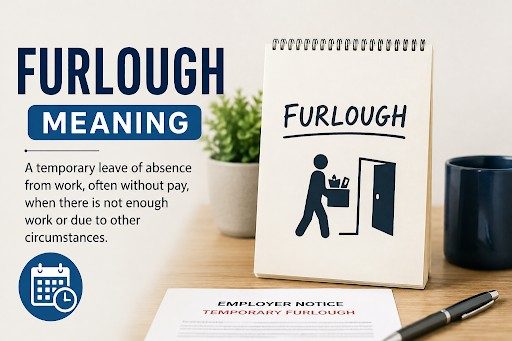
That stressful gap is exactly what furlough meaning covers. It is a temporary unpaid leave that keeps your employment alive while your employer handles a rough patch.
This guide gives you the real story. You will learn how a furlough works, how it differs from a layoff, and the smartest ways to protect your money and benefits.
Furlough Meaning at Its Core
A furlough is a mandatory, temporary unpaid leave from work. You remain an official employee, but you stop working and stop earning.
Think of it as a forced pause, not a permanent stop. Employers use it to cut payroll costs quickly without going through the slow, expensive process of rehiring later.
The key word is “temporary.” A true furlough has an expected return date, even if that date shifts as business conditions change.
Why Companies Use Furloughs Instead of Layoffs
Hiring and training new workers costs a fortune. A furlough lets a company keep its workforce on standby.
When demand bounces back, managers can call everyone back within days. That beats weeks of interviews, onboarding, and lost institutional knowledge.
Furloughs also protect a company’s reputation. Layoffs scare away customers, investors, and top talent.
Furlough vs. Layoff: The Real Difference
Many workers use the words “furlough” and “layoff” as if they mean the same thing. They don’t.
A layoff ends your employment permanently. A furlough keeps your job on pause, at least on paper.
| Feature | Furlough | Layoff |
|---|---|---|
| Employment status | You remain an employee | Your employment ends |
| Pay | Usually unpaid | Severance may apply |
| Benefits | Often continue | Usually end or require COBRA |
| Return to work | Expected, but not guaranteed | No expectation |
| Unemployment eligibility | Yes, in most states | Yes |
This table shows why a furlough is often the better bad option. You keep your title, your benefits may continue, and you have a real chance of going back.
But do not confuse a furlough with a promise. Employers can convert it into a permanent layoff if business keeps getting worse.
How Furlough Actually Works in 2026
Furloughs come in several shapes. The one you experience depends on your industry, employer size, and the reason behind the slowdown.
Paid vs. Unpaid Furlough
Most private-sector furloughs are unpaid. You stop working, and you stop earning.
Some union contracts or generous employers offer paid furloughs. You might get a percentage of your salary or full pay for a short period.
Government shutdown furloughs are unpaid during the shutdown. Congress later voted to give back pay to federal workers in many past shutdowns.
Partial Furlough and Reduced Hours
A partial furlough cuts your hours instead of sending you home entirely. You might work three days a week instead of five.
Your pay drops, but you keep some income and stay connected to your team. Many retailers and manufacturers use this model to ride out slow seasons.
This softer version still qualifies you for partial unemployment in several states. That can replace a meaningful chunk of your lost wages.
Your Legal Rights During a Furlough
You have more rights during a furlough than most people realize. Knowing them can save you thousands of dollars.
Unemployment Benefits
In almost every state, a furlough counts as a qualifying job loss for unemployment. You did not quit, and you did not get fired for cause.
Apply for unemployment the same day your furlough starts. Delays in filing mean delays in getting your first payment.
Even a partial furlough can qualify. Many states allow reduced-hours unemployment to cover part of your lost wages.
Health Insurance and Benefits
Most employers keep your health insurance active during a short furlough. You still pay your portion of the premium, just like normal.
Ask your HR department for written confirmation. If they cannot keep your coverage, you may qualify for COBRA or a marketplace plan.
Do not let health coverage lapse. A medical emergency during an unpaid furlough can wipe out your savings faster than the lost wages.
Can You Work Another Job?
Yes, in most cases. A furlough does not usually carry a non-compete restriction because your employer is not paying you.
Taking a temporary side gig can help you survive without quitting your main job. Just be ready to return when your employer calls you back.
Check your employee handbook first. Some companies require written notice before you take outside work, even during a furlough.
Smart Ways to Handle a Furlough Financially
A furlough can break your budget in weeks. These moves will help you stay ahead of the damage.
- Apply for unemployment on day one.
- Cut all non-essential subscriptions and negotiate bills.
- Pull from emergency savings only after you know your unemployment amount.
- Look for short-term contract work or gig income.
- Ask your landlord or mortgage lender about hardship programs.
- Do not wait to update your LinkedIn profile and résumé.
- Get every furlough detail in writing, including your expected return date.
These steps feel small, but they compound. Workers who act fast during the first week recover much quicker than those who freeze.
Recent Furlough Data You Should Know
Numbers make the risk real. Here are a few well-documented furlough events from the last decade and a half.
| Event | Year | Approx. Workers Furloughed | Key Lesson |
|---|---|---|---|
| U.S. government shutdown | 2013 | 850,000 | Even federal jobs face sudden unpaid breaks |
| Longest U.S. shutdown | 2018-2019 | 800,000 | Furloughs can last over a month |
| COVID-19 pandemic | 2020 | Millions (Macy’s 130,000, Disney 100,000) | Entire industries can pause overnight |
These examples prove a furlough is not a personal failure. It is a business response to a cash crunch, a shutdown, or a global shock.
That said, the data also shows a hard truth. Some furloughs never turn back into full-time jobs. Treat every furlough as a warning sign to build a backup plan.
Frequently Asked Questions
Does furlough mean fired?
No. A furlough means your employer pauses your work and pay, but you stay on the payroll. Getting fired ends your employment. A furlough can turn into a layoff, but they are not the same at the start.
Can you collect unemployment on furlough?
Yes, in most states. Since you did not quit and were not fired for misconduct, a furlough generally qualifies you for unemployment benefits. Apply as soon as your furlough begins to avoid delays.
How long can a furlough last?
There is no single legal limit. A furlough can last a few days, several weeks, or months. The return date depends on the employer’s finances and market demand.
Do you get paid after a furlough?
Usually not for the time you did not work. Some government shutdowns later granted back pay, and some employers offer paid furloughs. Check your employer’s written policy before assuming you will receive any pay.
Is furlough the same as layoff?
No. A furlough keeps your job on pause, while a layoff ends your employment. Furloughed workers often keep benefits and have a return date. Laid-off workers typically lose benefits and have no return expectation.
Final Verdict: Your Furlough Survival Playbook
A furlough hurts, but it does not have to destroy your finances. The moment you hear the word, shift into action mode.
Treat the first week like a new job: file for unemployment, cut expenses, and document every conversation with HR.
The biggest insider tip? Do not wait for a formal return date to protect yourself. Build a side income and keep your resume sharp, because a furlough is a warning, not a guarantee.