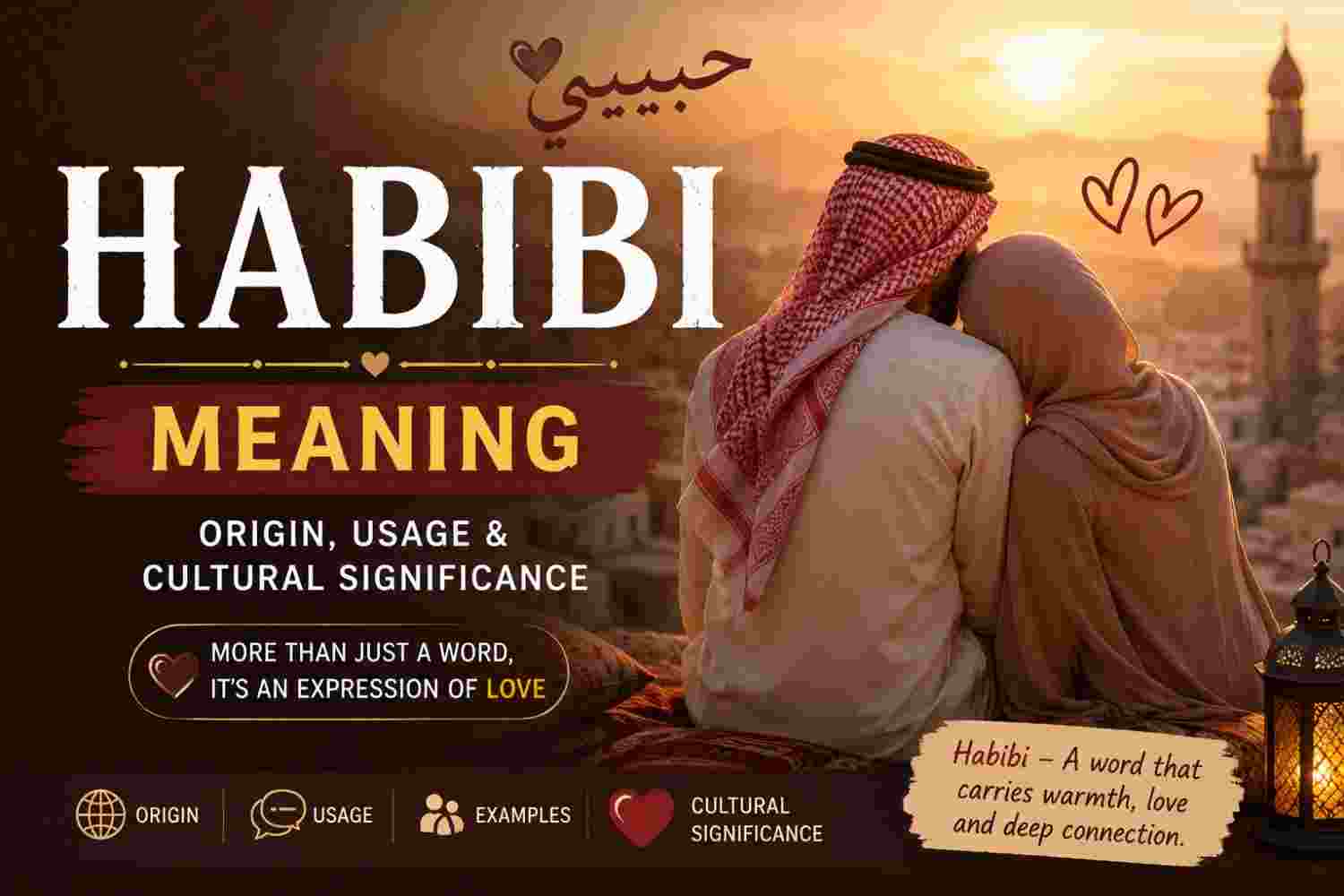
You’ve heard it in every Arabic love song, every Dubai vlog, and maybe from that friend who thinks he’s a local after one trip to Doha. Most people assume habibi meaning is simply “my darling” and leave it there. That assumption has caused more awkward romantic moments than you’d believe.
By the time you finish this guide, you’ll know exactly when habibi is romantic, when it’s just friendly, and how to use it without sounding like a confused tourist. No fluff, no robotic dictionary nonsense. Just the real cultural playbook.
What Does Habibi Mean in Arabic? The Literal Translation Most People Get Wrong
The word habibi comes from the Arabic root *h-b-b*, which means love. Add the suffix *-i* and you get “my beloved” or “my dear.” It is the masculine singular form. In Arabic script, it looks like this: حبيبي.
But here’s the thing English speakers miss. Habibi meaning does not stay locked inside a romantic novel. It can mean buddy, sweetheart, bro, sir, or even “come on, man” depending on tone and setting.
The pronunciation is also different from how most Westerners say it. It’s ha-BEE-bee, with the stress on the second syllable, not HA-bibi. Get that wrong and you instantly mark yourself as a foreigner.
Why a Dictionary Definition Fails You
A dictionary will tell you habibi means “my darling” and stop there. Real Arabic does not work that way. In Cairo, a shopkeeper might say “Ahlan habibi” to a male customer just to be warm. No romance, no hidden agenda.
In Beirut, a mother calls her five-year-old son habibi while wiping his face. In Dubai, two male colleagues call each other habibi the way Americans say “buddy.” The dictionary misses all of that.
The Root Word “Hubb” and Its Family
Arabic builds entire emotional worlds from one root. Hubb means love. Habib means beloved. Habiba is the feminine form. Mahbub means someone who is loved.
Once you see that family, habibi meaning becomes clear: it is not a single flat word. It is a whole system of affection, and habibi is just the most famous member.
The Emotional Weight: Why Habibi Is Not Just a Word
In Arab culture, language carries hospitality. Calling someone habibi softens a request, builds instant warmth, and lowers social walls. A waiter might say it to a customer. A taxi driver might say it before giving directions.
Tone changes everything. A quick “habibi” between friends means “dude” or “bro.” A slow, stretched-out “ya habiiiibi” from a partner can mean deep love, longing, or even pleading.
It can also smooth over criticism. “Habibi, what are you doing?” sounds much gentler than a cold “What are you doing?” That emotional range is exactly why this word refuses easy translation.
- Parent to child: Pure, protective affection.
- Close male friends: Same energy as “bro” or “mate.”
- Polite strangers: A friendly greeting, not a come-on.
- Romantic partners: Tender and intimate, often with “ya.”
- Frustration: “Habibi, I already told you three times.”
Habibi vs Habibti: The Gender Rule Nobody Explains Clearly
Here is the rule that trips up almost every beginner. Habibi is masculine. Habibti is feminine. If you are speaking to a man or boy, say habibi. If you are speaking to a woman or girl, say habibti.
Most songs and social media posts ignore this rule because Arabic music loves poetic license. Singers often use habibi for a female beloved because it fits the melody better. But in real conversation, native speakers pay attention to gender.
- Habibi — use for a male.
- Habibti — use for a female.
- Habib — the root noun for beloved, often used in names.
- Habib albi is a male term meaning “love of my heart.”Habib albi — “love of my heart,” masculine.
- Habibti albi is a feminine expression that means “love of my heart.”
What About “Habibti” in Texting?
In texting, many Arabs type habibti when writing to a daughter, sister, or female friend. Some people on English keyboards skip the “t” and type habibi for everyone, but that is lazy typing, not proper grammar.
If you are not sure of the gender, do not guess. Listen first. Native speakers will usually reveal the correct form within seconds.
7 Contexts Where Habibi Changes Meaning Completely
- Romantic love: “Ya habibi, ana bahebak” means “Oh my darling, I love you.” This is the version you hear in slow songs.
- Parent to child: A mother says habibi to her son and habibti to her daughter. It feels like a warm verbal hug.
- Close friendship: Two male friends say “Habibi, where have you been?” the way others say “Bro, where have you been?”
- Polite strangers: A fruit seller says “Habibi, try this orange.” It is hospitality, not flirtation.
- Mild frustration: “Habibi, please focus” can mean “Dude, focus” without sounding harsh.
- Customer service: In many Arab countries, staff use habibi to create a friendly atmosphere for male customers.
- Music and poetry: The word becomes exaggerated, symbolic, and deeply romantic. Context is everything.
Each of these settings shifts the emotional temperature. That is why you cannot reduce habibi meaning to one English phrase.
Habibi in Pop Culture: From Amr Diab to Global Slang
Amr Diab’s 1996 smash “Habibi Ya Nour El Ain” did more for this word than any textbook. The title translates to “My darling, light of my eye.” That song turned habibi into a global pop export.
Since then, the word has appeared in Western tracks, social media captions, and memes. Non-Arabs in multicultural cities now use habibi the way people say “dear” or “bro.” It sounds musical, warm, and slightly exotic.
But that global fame comes with a trade-off. The word often gets flattened into a joke or a lazy caption. People use it without understanding the gender rules or the emotional range.
Why Non-Arabs Love This Word
Habibi feels safe and affectionate. It has no harsh consonants, it rolls off the tongue, and it carries instant Middle Eastern cool. That is why it works so well in music and memes.
Still, using it correctly earns real respect. Using it incorrectly gets you the kind of smile people give a toddler wearing adult shoes.
How to Respond When Someone Calls You Habibi
There is no single correct reply. The response depends entirely on who said it and how they said it.
- From a friend or colleague: Reply with “Ahlan habibi” or “Hala habibi.” It mirrors the warmth.
- From a shopkeeper or stranger: A smile and “Shukran” is enough. You don’t need to force the word back.
- From a romantic partner: If she is female, say “Ya habibti.” If he is male, say “Ya habibi.”
- If you are unsure: A simple “Habibi” back works among friends, but not with a romantic interest unless you mean it.
What Never to Say
Do not call a woman you just met “habibti” if you are a man. It can feel too familiar or condescending. Do not use habibi sarcastically with elders unless you have a very close relationship.
When in doubt, let the other person lead. Arabic speakers appreciate a respectful listener far more than a foreigner who overuses one word.
Common Mistakes Tourists and New Arabic Speakers Make
- Using habibi for women. That should be habibti in everyday speech.
- Assuming it is always romantic. In most daily situations, it is just friendly.
- Mispronouncing it. Say ha-BEE-bee, not HA-bi-bi.
- Using it in formal business meetings. It can sound unprofessional if there is no personal rapport.
- Saying habibti to a man. That is grammatically wrong and sounds odd.
- Using it sarcastically without understanding tone. You might accidentally insult someone.
Quick Fix for Sounding Natural
Start with “Ahlan” or “Marhaba” and let locals set the tone. If someone calls you habibi first, mirror their energy. That is the fastest way to learn habibi meaning in real life, not just on paper.
Quick Reference Table: Habibi and Related Terms
| Term | Literal Meaning | Gender | Common Situation |
|---|---|---|---|
| Habibi | My beloved / my dear | Masculine | Friends, sons, partners, polite strangers |
| Habibti | My beloved / my dear | Feminine | Daughters, female friends, female partners |
| Habib albi | Love of my heart | Masculine | Deep romantic or family love |
| Habibti albi | Love of my heart | Feminine | Deep romantic or family love |
| Ya habibi | Oh my darling | Masculine | Calling, pleading, excitement |
| Habib | Beloved | Neutral / masculine | Root noun, nicknames, titles |
This table shows how Arabic recycles one root into multiple emotional tools. Habibi meaning sits inside that larger system.
Arabic has more than 25 dialects and over 400 million speakers, yet habibi appears in nearly every one. The pronunciation changes slightly, but the warmth stays constant.
Frequently Asked Questions About Habibi Meaning
Can you call a friend habibi?
Yes. Between male friends, habibi works like “bro” or “buddy.” Between female friends, habibti is the correct form. It is one of the most common friendly words in Arabic.
What is the difference between habibi and habibti?
Habibi is masculine and habibti is feminine. Use habibi for a male and habibti for a female. The difference matters in daily conversation, even if songs sometimes blur the lines.
Is habibi romantic or platonic?
It can be both. Tone, context, and relationship decide the meaning. A mother saying habibi to her son is not romantic. A partner whispering “ya habibi” definitely is.
Can a woman say habibi to a man?
Yes. A woman can say habibi to a male friend, son, brother, or romantic partner. The word itself is masculine, so it is grammatically correct when speaking to a male.
What does ya habibi mean?
“Ya habibi” means “oh my darling” or “oh my dear.” The “ya” adds emphasis, longing, or excitement. It is common in songs, romantic moments, and friendly calls.
How do you respond to habibi?
It depends on the person. With a friend, say “Ahlan habibi” or “Hala habibi.” With a stranger, a warm “Shukran” works. With a partner, return the affection with the correct gendered form.
Is habibi used by non-Arabs?
Yes. The word has spread through music, social media, and multicultural cities. Non-Arabs often use it casually, but understanding the gender and tone rules makes a much better impression.
Bottom Line: Your New Secret Weapon in Arabic Conversations
Habibi meaning is not just a translation challenge. It is a social key that opens doors, softens tension, and builds instant rapport. The secret is not memorizing one definition. It is learning how the word shifts with gender, tone, and context.
Remember the simple rule: habibi for males, habibti for females. If you are unsure, stay warm, listen first, and let native speakers set the rhythm. Get that right and you will never sound like a lost tourist again.