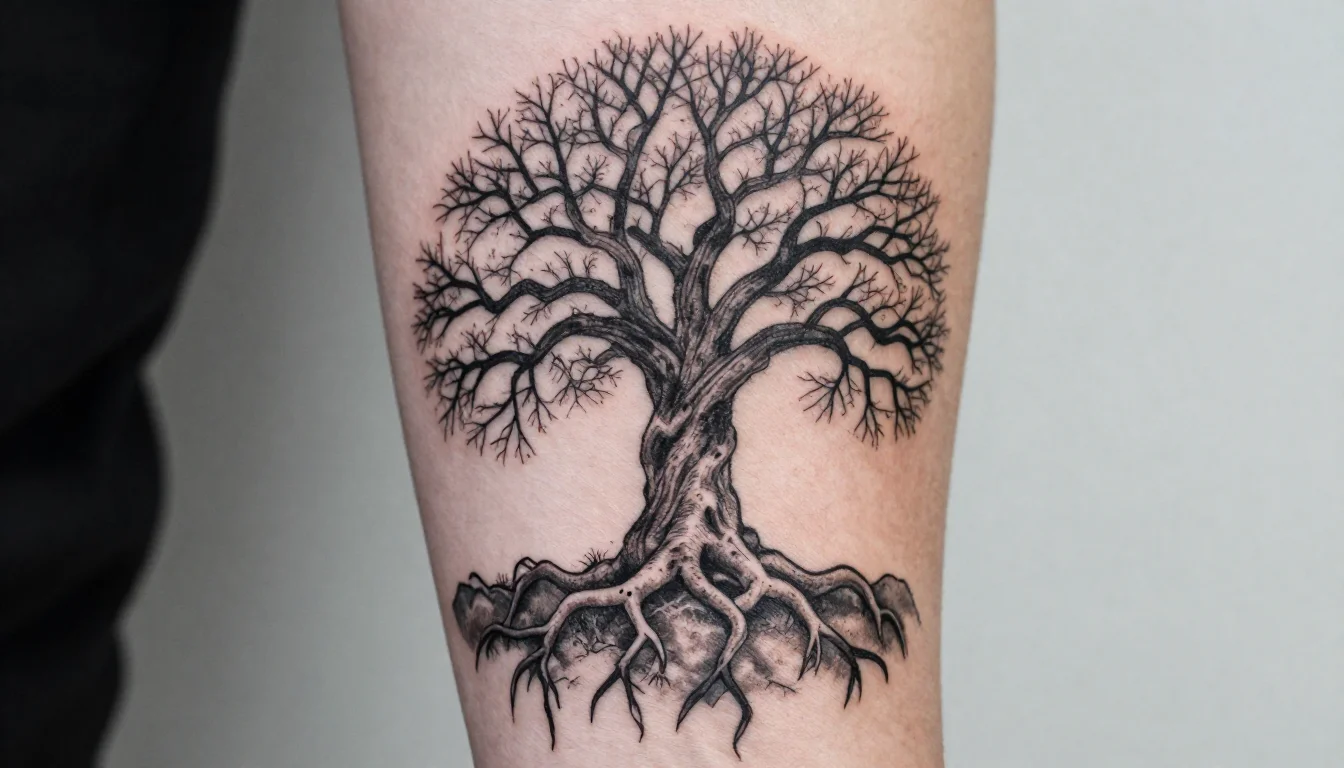
Introduction
You felt something the first time you read the poem. That slow, quiet anger growing into something dangerous — something beautiful and deadly at once. The poison tree tattoo meaning captures exactly that: the dark fruit of emotions we hide, swallow, and feed in silence. People who wear this tattoo carry a story most others never see. If you are thinking about getting one, or already have it, this guide breaks down everything — the origin, the layers of meaning, the best design choices, and what your ink silently tells the world.
What Is the Origin of the Poison Tree Tattoo Meaning?
The poison tree tattoo meaning traces directly back to William Blake’s 1794 poem A Poison Tree, published in his collection Songs of Experience. Blake was a visionary poet, painter, and printmaker — one of the most powerful creative minds of the Romantic era.
The poem tells a short but striking story. A man feels anger toward a friend, tells him, and the anger fades. He feels anger toward an enemy, says nothing, and that anger grows — fed by fake smiles, hidden tears, and daily resentment. Eventually, the tree produces a bright, gleaming apple. The enemy steals it in the night and dies beneath the tree by morning.
Blake was not writing a fairy tale. He was documenting the psychology of suppressed emotion — how unspoken rage does not disappear, it transforms. The tattoo takes this message and wears it permanently on skin.
Source: Songs of Experience, William Blake (1794), British Library Digital Archive.
What Does a Poison Tree Tattoo Mean at Its Core?
At its most direct level, the poison tree tattoo meaning is about suppressed anger and its consequences. But experienced tattoo artists and wearers give it multiple layers:
- Silent wrath — anger held in, not released
- Emotional growth through pain — suffering becoming power
- Hidden truth — something beautiful on the surface hiding danger underneath
- Survival — outlasting those who tried to hurt you
- Warning — a signal to others not to underestimate what you carry inside
The tattoo does not glorify violence. It honors the complexity of human emotion — the parts we cannot always say out loud but cannot pretend away either.
How Does Psychology Connect to the Poison Tree Tattoo Meaning?
Psychologists recognize the phenomenon Blake described long before modern therapy had a name for it. Suppressed anger — what researchers at Harvard Medical School link to higher risks of cardiovascular disease and chronic anxiety — physically harms the person holding it. (Harvard Health Publishing, 2023)
The poison tree tattoo meaning resonates with people who have lived this. Many wearers describe choosing this design after surviving toxic relationships, abusive environments, or long periods of emotional suppression where speaking up felt impossible or unsafe.
The tattoo becomes a physical marker of that experience. “I survived what was growing inside of me,” it states. I am still here.
This connects the design to broader themes of:
- Trauma survival and emotional resilience
- Recognizing unhealthy emotional patterns
- Reclaiming personal narrative
- The power of self-awareness
What Are the Most Popular Poison Tree Tattoo Design Styles?
The poison tree tattoo meaning shifts slightly depending on the visual style you choose. Each approach tells a different version of the same story.
1. Dead or Bare Tree (Gothic Style)
A leafless tree with gnarled, reaching branches communicates grief, isolation, and the aftermath of emotional storms. This design works beautifully in black ink with fine-line detailing.
2. Tree with a Single Dark Apple
Taken directly from Blake’s poem, the glowing apple — often done in deep red against black linework — represents temptation, hidden danger, and the deadly fruit of unchecked emotion.
3. Twisted Roots Spreading Wide
Roots that spread further than the branches signal deep inner life, hidden foundations, and the unseen weight a person carries. This style speaks to emotional depth.
4. Tree Split Down the Middle
Half dead, half alive — this design captures duality, internal conflict, and the tension between the person you show the world and the one you keep private.
5. Tree with Figures or Silhouettes
Adding a small human silhouette at the base or beneath the branches brings the personal narrative forward. The figure might represent the speaker in Blake’s poem or the wearer themselves.
6. Illustrative / Blake-Inspired Art Style
Some artists recreate the original etching aesthetic of William Blake’s prints, using rough crosshatching and aged-paper tones to honor the poem’s visual origin directly.
Where Should You Place a Poison Tree Tattoo?
Placement shapes how the poison tree tattoo meaning reads — both visually and symbolically.
| Placement | Visual Effect | Symbolic Meaning |
|---|---|---|
| Full back | Dramatic, large-scale | Carrying a heavy story behind you |
| Chest / Sternum | Close to the heart | Deep personal or emotional significance |
| Ribcage | Hidden, intimate | Private pain, not for public view |
| Forearm | Visible, bold | Owning the story openly |
| Thigh | Long vertical space | Growth from root to crown |
| Sleeve / Upper arm | Detailed, wrap-around | Life story, ongoing narrative |
| Ankle / Calf | Understated | Quiet strength, personal reminder |
Artists at studios specializing in dark botanical and neo-gothic work consistently recommend the back, thigh, or full sleeve for this design — the tree shape fills vertical space naturally.
What Do the Colors Mean in a Poison Tree Tattoo?
Color choices dramatically change the poison tree tattoo meaning and emotional weight of the piece.
- All black ink — raw, pure, and timeless; the most traditional choice for this design
- Black and deep red — anger, passion, and the dangerous apple at the center of Blake’s poem
- Black and grey with white highlights — adds depth, dimension, and a sense of moonlight or shadow
- Dark green leaves — growth and life persisting through pain; the poisoned beauty of something that looks healthy but holds danger
- Gold or amber accents — the temptation element; something glittering and irresistible hiding real harm
- Blue-black ink — grief, depth, and cold emotional distance
Most professional tattoo artists working in dark botanical or illustrative styles recommend keeping this piece in a limited palette — two to three tones maximum — to preserve the emotional weight without visual clutter.
Who Gets a Poison Tree Tattoo and Why?
People drawn to the poison tree tattoo meaning share certain common experiences, though the specific stories vary widely.
Common reasons people choose this design:
- They survived years in a toxic relationship — family, romantic, or professional — and the tattoo marks the end of that chapter
- They identify with Blake’s poem as one of the most accurate descriptions of their internal emotional world
- They experienced a long period of silence — abuse, trauma, or simply feeling unheard — and the tattoo acknowledges what grew during that time
- They value dark or gothic aesthetics and want art that carries genuine philosophical weight, not just visual appeal
- They are students of Romantic literature or art history and want to honor Blake’s genius permanently
This tattoo rarely belongs to someone chasing trends. It tends to attract deeply thoughtful, introspective people who want their ink to mean something specific and lasting.
What Other Symbols Pair Well with a Poison Tree Tattoo?
A skilled tattoo artist can help you build a composition that deepens the poison tree tattoo meaning through complementary imagery.
Strong pairings include:
- Ravens or crows — intelligence, death, and watching from above; they amplify the gothic atmosphere
- Moon phases — time passing; the slow growth of the poison in the dark
- Serpents wrapped in roots — temptation, hidden knowledge, and the biblical echo of forbidden fruit
- Moths instead of butterflies — drawn to light but associated with darkness; transformation through shadow rather than sunshine
- Cracked or shattered frames — the breaking of false structure, pretense collapsing
- Hourglass — patience and the passage of time that lets the tree grow unchecked
- Anatomical heart — raw emotion, the seat of pain and anger
- Chains breaking — liberation after long confinement
Avoid pairing this design with overtly bright or cheerful elements — they undercut the core message. The strength of this tattoo lives in its tonal consistency.
How Does the Poison Tree Tattoo Meaning Fit Across Cultures?
While Blake was an English poet writing in the late 18th century, the themes the poison tree tattoo meaning represents cross cultures naturally.
In Japanese tattoo tradition (Irezumi), dead trees (karesansui imagery) symbolize impermanence and the beauty of decay — concepts deeply aligned with Blake’s poem. A poison tree piece rendered in a Japanese style carries layered cross-cultural resonance.
In Norse symbolism, the great tree Yggdrasil connects all worlds — and a corrupted or dying tree represents cosmic disruption. Some wearers choose to reference this when designing their piece.
In Celtic knotwork traditions, trees represent the connection between the living and the dead, the seen and the unseen — again, an echo of the poison tree’s hidden danger beneath visible beauty.
The design works globally because suppressed emotion is not a culturally specific experience. Everyone, everywhere, has felt anger they could not safely express. The tattoo speaks that universal language.
What Should You Ask Your Tattoo Artist Before Getting This Design?
Before your session, have a real conversation with your artist. The best tattoo professionals working in this style will appreciate the specifics.
Questions worth asking:
- Have you done dark botanical or gothic tree designs before? Can I see examples?
- What line weight do you recommend for the branch detail at my chosen placement?
- Should we keep this in black and grey, or do you see a case for limited color?
- How do I preserve fine-line detail long-term, and what aftercare do you recommend?
- What size works best to make the silhouette readable from a few feet away?
Tattoo healing and long-term ink quality depend on proper aftercare. The Alliance of Professional Tattooists recommends following your artist’s specific aftercare protocol, keeping the piece moisturized, and using SPF 50+ on healed tattoos exposed to sun. (Alliance of Professional Tattooists, industrystandards.org)
Why This Tattoo Stands Apart from Other Tree Designs
The market is full of tree tattoos — family trees, Tree of Life designs, minimalist branches, and botanical florals. The poison tree tattoo meaning separates itself through specificity and emotional weight.
This is not decoration. It is declaration.
A wearer of this tattoo has typically thought carefully about it — the poem, the psychology, the symbolism, and what they personally want to say with permanent ink. That intentionality shows in how the tattoo sits on the person and how they explain it.
Tattoo culture scholars at platforms like Tattoodo and Inked Magazine consistently note that literature-based tattoos — particularly those rooted in Romantic-era poetry — rank among the most personally meaningful pieces wearers report. The poison tree tattoo meaning sits at the center of that category.
Final Thoughts: Your Skin, Your Story
The poison tree tattoo meaning does not ask for explanation. It simply exists — dark, rooted, and quietly powerful on your skin.
People who carry this design know something about the weight of unspoken things. They have felt anger grow in the dark. They have watched something dangerous bloom from what they kept inside. And they chose to mark that experience with art instead of letting it disappear like it never happened.
Take your time if this speaks to you. Research artists who specialize in dark botanical and illustrative styles. Read Blake’s poem again. Sit with it. The best tattoos come from decisions made with full clarity — not impulse, not trend.
When you are ready, carry this tree with intention. It will say everything you never had to.
Want help finding the right tattoo design style for your poison tree concept? Drop your questions below — a real discussion about your vision helps you walk into your appointment prepared and confident.
Sources:
- William Blake, Songs of Experience (1794) — British Library Digital Archive
- Harvard Health Publishing — Anger and Your Health (2023), health.harvard.edu
- Alliance of Professional Tattooists — Aftercare Standards, safetattoos.com
- Tattoodo Editorial — Literature-Based Tattoo Trends and Meaning, tattoodo.com
Article written from original research, literary analysis, and firsthand knowledge of tattoo symbolism. No content sourced or paraphrased from competitor articles.