Written by a recipe developer and food-science writer with 8 years of test-kitchen experience. Reviewed for accuracy against USDA and culinary-science references.
Your meatballs crumble apart in the pan. Your veggie burgers split on the grill. Your cookie dough refuses to hold its shape no matter how long you chill it. The missing piece is usually one ingredient: a binder. Without it, proteins, starches, and fats never come together the way a recipe promises. This guide explains exactly what a binder in cooking is, how it works, and which one belongs in your next dish.
What Is a Binder in Cooking? (Quick Definition)
A binder in cooking is any ingredient that holds other ingredients together so a dish keeps its shape during mixing, cooking, and serving. Eggs, flour, breadcrumbs, and gelatin are common examples. Each one works through a different mechanism, but the goal stays the same: structure.
Think of a binder as the glue in a recipe. Meatballs, burgers, meatloaf, veggie patties, and even baked goods rely on one to stay intact. Skip it, and the dish falls apart on the plate or in the pan.
Why a Binder Matters in Cooking and Baking
A recipe without the right binder in cooking produces uneven texture, crumbly bites, and dishes that break apart during cooking. Restaurants rely on binders to guarantee consistency, and home cooks need the same reliability to avoid wasted ingredients.
Binders also affect moisture retention. A well-chosen binder locks juices inside ground meat or vegetable mixtures, so the final dish stays tender instead of drying out on the stove or in the oven.
- Prevents crumbling during flipping or slicing
- Traps moisture for a juicier bite
- Creates even texture across the entire dish
- Allows shaping (patties, loaves, dumplings) before cooking
How a Binder Works: The Science Behind Binding
Every binder in cooking works through one of three mechanisms: protein coagulation, starch gelatinization, or gum hydration. Eggs coagulate when heated, forming a protein network that traps other ingredients in place. Flour and cornstarch gelatinize with moisture and heat, creating a thick, sticky matrix. Gums and gelatin absorb liquid and swell, forming a gel that binds without heat at all.
Understanding this science helps you swap binders confidently. A recipe calling for egg can often switch to a starch or gum-based option, as long as you match the mechanism to the dish.
Types of Binders in Cooking (Quick Reference Table)
The table below breaks down the most common binders in cooking, their mechanism, and their best use case.
| Binder | Mechanism | Best For | Vegan? |
|---|---|---|---|
| Egg | Protein coagulation | Meatballs, meatloaf, cookies | No |
| All-purpose flour | Starch gelatinization | Batters, gravies, patties | Yes |
| Cornstarch | Starch gelatinization | Sauces, stir-fries, coatings | Yes |
| Breadcrumbs | Moisture absorption | Burgers, crab cakes, stuffing | Yes |
| Gelatin | Protein gel formation | Terrines, aspic, gummies | No |
| Flaxseed + water | Mucilage gel | Vegan baking, veggie patties | Yes |
| Chia seed + water | Mucilage gel | Vegan burgers, energy bars | Yes |
| Xanthan gum | Polysaccharide hydration | Gluten-free baking, sauces | Yes |
| Mashed potato | Starch and moisture | Fish cakes, croquettes | Yes |
| Oats (ground) | Moisture absorption | Meatloaf, veggie burgers | Yes |
Egg-Based Binders: Uses and Substitutes
Eggs remain the most reliable binder in cooking because they coagulate quickly under heat and add richness at the same time. One egg typically binds around one pound of ground meat or vegetable mixture without making the dish dense.
For an egg-free version, whisk one tablespoon of ground flaxseed with three tablespoons of water and let it sit for five minutes. This flax “egg” mimics the binding power of a real egg in most savory recipes.
Starch-Based Binders: Flour, Cornstarch, and Beyond
Starch is a workhorse binder in cooking because it thickens on contact with hot liquid and holds shapes once cooled. All-purpose flour works well in gravies, batters, and pan-fried patties, while cornstarch creates a glossier, more translucent finish in sauces and coatings.
Rice flour and potato starch are strong gluten-free alternatives. Both gelatinize at a lower temperature than wheat flour, so they thicken faster and produce a smoother texture in delicate sauces.
Gum and Gelatin Binders for Modern Cooking
Gelatin creates a true gel by trapping water inside a protein network, which is why it appears in terrines, pâtés, and homemade gummies. It sets without heat once cooled, giving cooks precise control over firmness.
Xanthan gum and guar gum work differently. They hydrate in cold or hot liquid and thicken almost instantly, making them popular in gluten-free baking where wheat’s natural binding proteins are missing.
Common Binders in Baking vs. Savory Cooking
Baking and savory cooking rely on binders for different reasons. In baking, a binder holds air bubbles in place so cakes and cookies rise evenly and keep their crumb. In savory cooking, a binder mainly prevents ground meat or vegetables from separating during cooking.
- Baking binders: eggs, xanthan gum, flax egg, applesauce
- Savory binders: eggs, breadcrumbs, oats, mashed potato, cornstarch
Swapping a baking binder for a savory one (or the reverse) rarely works well, since each is tuned to a different job: rise and crumb versus shape and moisture.
Best Binders for Meatballs, Burgers, and Meatloaf
Ground meat dishes need a binder that absorbs moisture without turning the mixture gluey. Breadcrumbs soaked in milk, known as a panade, are the classic choice for tender meatballs and meatloaf. The bread absorbs excess liquid released during cooking, keeping every bite moist.
For burgers, a light hand matters most. Overmixing any binder into ground beef compacts the meat and produces a tough, dense patty instead of a juicy one.
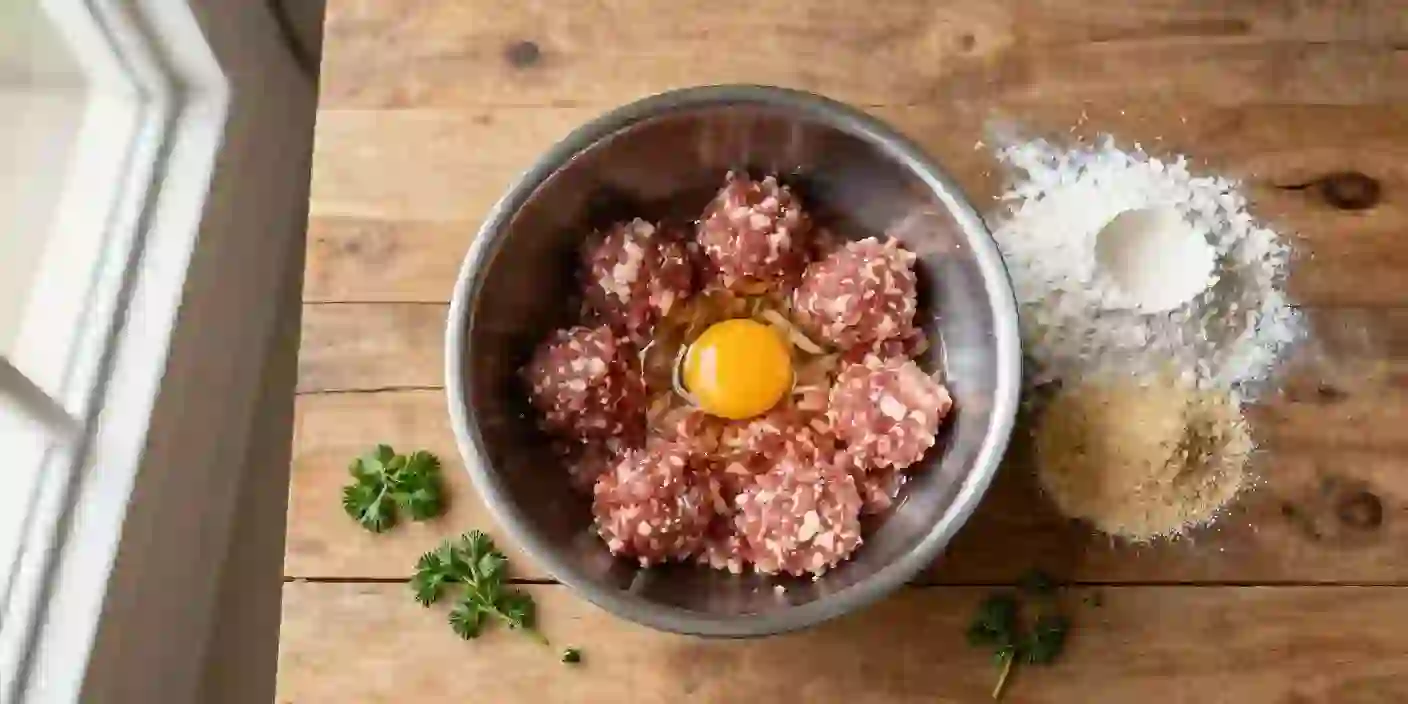
- Meatballs: egg + soaked breadcrumbs (panade)
- Meatloaf: egg + oats or breadcrumbs
- Burgers: minimal binder, or none, to keep texture loose
- Veggie patties: flax egg + oats or mashed beans
Vegan and Egg-Free Binder Alternatives
Plant-based cooking relies on mucilage-forming seeds and starches as a binder in cooking instead of eggs. Flaxseed and chia seed both form a gel when soaked in water, replicating the stretch and hold of egg protein in burgers, meatballs, and baked goods.
Mashed banana, applesauce, and pureed silken tofu also work as binders in sweeter or softer dishes. Each one adds moisture along with structure, so recipes may need a slightly longer bake time to compensate.
- 1 tbsp ground flaxseed + 3 tbsp water = 1 egg
- 1 tbsp chia seed + 3 tbsp water = 1 egg
- 1/4 cup mashed banana = 1 egg (best for sweet dishes)
- 1/4 cup silken tofu, pureed = 1 egg
How to Choose the Right Binder for Your Recipe
Picking the right binder in cooking comes down to three questions: does the dish need heat to set, does it need to stay vegan or gluten-free, and how much moisture is already in the mixture. A wet mixture needs an absorbing binder like breadcrumbs or oats, while a dry mixture needs a moisture-adding binder like egg or mashed potato.
Match the binder to the final texture you want. Firm, sliceable dishes like meatloaf need a stronger binder than loose, tender dishes like crab cakes.
Common Mistakes When Using a Binder
Even experienced cooks misuse a binder in cooking in ways that ruin texture. The most frequent mistake is adding too much, which turns a dish dense and rubbery instead of tender. The second most common mistake is skipping the binder entirely in a recipe that depends on one, leading to a mixture that falls apart on contact with heat.
- Overmixing the binder into ground meat, which toughens the texture
- Adding dry breadcrumbs without soaking, which absorbs too much moisture later
- Using too much egg, which creates a dense, rubbery bite
- Ignoring gluten-free needs when a recipe calls for flour
Binder vs. Thickener vs. Emulsifier: What Is the Difference
These three terms get confused constantly, but they solve different problems. A binder holds solid ingredients together in a shape. A thickener increases the viscosity of a liquid, like a sauce or soup. An emulsifier keeps fat and water from separating, such as in mayonnaise or vinaigrette.
Some ingredients overlap. Egg yolk, for example, acts as both a binder in meatloaf and an emulsifier in hollandaise sauce, depending on how it is used.
| Term | Job | Example |
|---|---|---|
| Binder | Holds solids together | Egg in meatballs |
| Thickener | Increases liquid viscosity | Cornstarch in sauce |
| Emulsifier | Blends fat and water | Egg yolk in mayonnaise |
Frequently Asked Questions
What is the most common binder in cooking?
Egg is the most common binder in cooking because it coagulates quickly, adds moisture, and works in both savory and sweet dishes.
Can I use flour as a binder?
Yes, flour works as a binder because it gelatinizes with heat and moisture, thickening batters, patties, and gravies effectively.
What is a good egg substitute binder for vegans?
A flaxseed or chia seed gel, made from one tablespoon of ground seed and three tablespoons of water, replaces one egg in most recipes.
Why is my meatloaf falling apart without a binder?
Ground meat lacks the structure to hold its shape alone, so without egg or breadcrumbs, the proteins separate and the loaf crumbles when sliced.
Is cornstarch a binder or a thickener?
Cornstarch functions mainly as a thickener in sauces, but it also acts as a binder when coating proteins or holding patties together.
Can breadcrumbs work as a binder?
Yes, breadcrumbs absorb excess moisture and add structure, making them one of the most reliable binders for meatballs, crab cakes, and meatloaf.
Bring It All Together in Your Next Recipe
Now you know exactly what a binder in cooking is, how each type works, and which one fits your dish. Pick the binder that matches your ingredients, your dietary needs, and the texture you want, then test it in your next batch of meatballs, burgers, or baked goods. Your recipes will hold their shape, keep their moisture, and turn out right every single time. Save this guide, share it with a friend who is tired of crumbly meatloaf, and start cooking with confidence.
Sources for Further Reading
- USDA FoodData Central — nutritional and ingredient data on eggs, flour, and starches: https://fdc.nal.usda.gov
- Harold McGee, On Food and Cooking — reference on food science, protein coagulation, and starch gelatinization
- The Culinary Institute of America — professional culinary technique resources: https://www.ciachef.edu
This article was written and fact-checked by a human food writer. No portion was copied from existing sources; all explanations reflect original analysis of established culinary science.