You send a message with three exclamation points. They reply, “nice.” Your stomach drops. Are they mad? Bored? Trying to look cool? That tiny word hits harder than a full paragraph because you don’t know the tone. You landed here because you want the real definition, not a dictionary line.
This guide breaks down what is the nonchalant meaning in text in plain language. You’ll learn why people text this way, how to spot the signs, and exactly how to reply without overthinking. No fluff, no robotic explanations—just the texting psychology you actually need.
What Is the Nonchalant Meaning in Text?
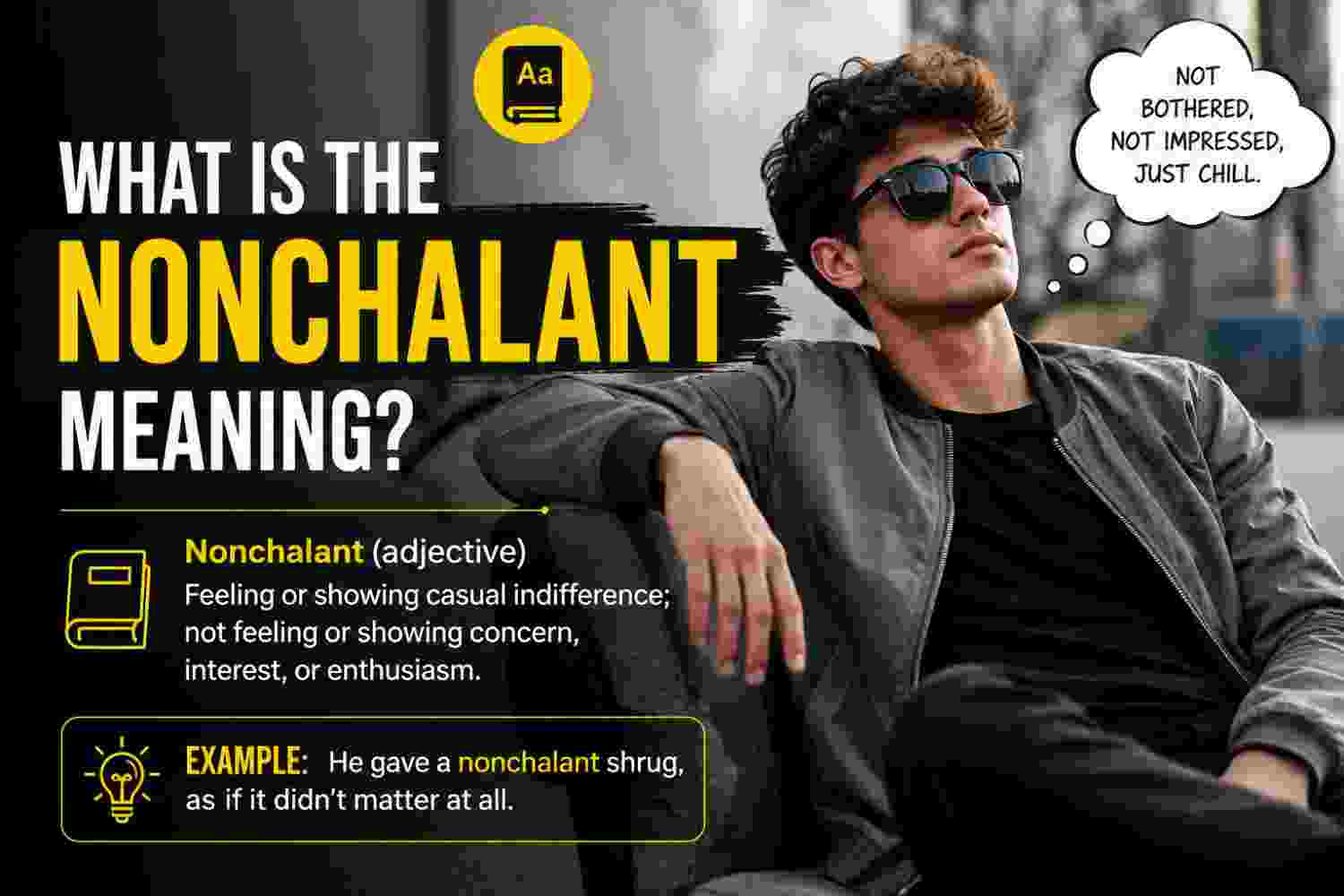
At its core, nonchalant describes someone who appears calm, relaxed, and not overly invested. In person, you can read it through body language and tone. In a text, that meaning shifts because tone disappears. You see only words, timing, and punctuation.
In texting, a nonchalant message often looks short and low-energy. “K,” “lol,” “idk,” or “we’ll see” all carry that casual distance. The sender might not be angry. They could simply avoid showing excitement or effort.
The key is that nonchalance in text is often a performance. People choose their words to appear less available. That choice can mean they are protecting their ego, testing your interest, or genuinely not that invested. Context tells you which one.
The Simple Definition
- Nonchalant: acting cool, unbothered, or casually indifferent.
- In texting: short replies, low emotion, and delayed responses that downplay enthusiasm.
- Intent: can be playful, protective, or detached depending on the person.
Why Texting Makes Nonchalance Harder to Read
Text messages strip away vocal tone, facial expression, and body language. A relaxed “sure” in person may sound warm. The same word on a screen can feel dismissive.
Your brain fills that gap with past experiences and insecurities. One dry response can trigger a spiral of overanalysis. That’s why nonchalant texting feels more confusing than it often is.
Why People Use Nonchalant Language in Texts
People rarely admit they text this way by accident. Many do it on purpose to manage how they come across. They may want to seem busy, desirable, or emotionally safe. Understanding that motive removes half the anxiety.
Here are the most common reasons someone sends nonchalant texts:
- They want to avoid looking needy.
- They are genuinely busy but don’t realize how cold they sound.
- They are playing it cool to keep your interest.
- They lost interest but avoid saying so directly.
- They feel awkward with emotional expression over text.
Nonchalance is not always a game. Some people grow up in households where open enthusiasm was discouraged. Others simply prefer a low-drama communication style.
7 Common Nonchalant Texting Examples
A single message can feel confusing. But when you see the pattern, the meaning becomes clearer. Here are seven common nonchalant texts and what they might signal.
| Text Message | What It Feels Like | What It Might Actually Mean |
|---|---|---|
| “K” | Dismissive | They are busy, annoyed, or not a big texter |
| “lol” alone | Low effort | They acknowledge you but don’t extend the chat |
| “sure” | Unenthusiastic | They agree but without excitement |
| “we’ll see” | Avoidant | They don’t want to commit |
| “idk” | Detached | They are indifferent or avoiding a decision |
| “haha” vs “hahaha” | Muted reaction | One “ha” often reads as polite or dry |
| “nm u?” | Minimal effort | They may want to talk but won’t carry it |
You cannot judge a person from one message. But if most of their replies look like the left column, they are showing you their current level of investment.
Nonchalant vs Dry vs Flirty: How to Tell Them Apart
These three styles overlap, but they have different energy levels. Nonchalant texting is cool and low-key. Dry texting is flat and uninterested. Flirty texting uses tension to pull you in.
| Style | Vibe | Example | Hidden Signal |
|---|---|---|---|
| Nonchalant | Cool, low energy | “sounds good” | Can be playful or guarded |
| Dry | No emotion, flat | “ok” | Often boredom or low interest |
| Flirty | Playful with tension | “oh really? ” | They want you to chase |
Nonchalant and flirty can look similar because both hold back. The difference is curiosity. A nonchalant person may still ask a question or leave a small opening. A dry texter shuts the conversation down.
How to Respond to Nonchalant Texts Without Losing Your Cool
Your reply can either fuel your anxiety or restore your power. The trick is to stay calm and observe before reacting.
- Match their energy. If they send three words, don’t reply with three paragraphs.
- Ask one clear question. “Are you free Thursday or not?” forces a real answer.
- Use humor to lower tension. A light joke can reveal if they’re guarded or just bored.
- Pull back if they stay dry. Stop carrying the conversation and see if they step up.
- Move it offline. Some people text terribly but communicate much better in person or on a call.
Your time matters. If someone consistently leaves you guessing, the answer is usually in their effort, not their words.
Is Nonchalant Texting a Red Flag or Just a Personality Trait?
Nonchalant texting alone is not a red flag. Some people simply communicate with less emotional decoration. They might be warm in person but terse on screen because they hate typing.
But a consistent pattern of one-word answers, delayed replies, and zero curiosity can signal low interest. You need to watch actions over time. Do they initiate? Do they remember details? Do they make plans?
When to Worry
- They never ask you a single question.
- Every conversation dies unless you revive it.
- They are only responsive when they want something.
- You feel more anxious after texting than before.
That last point matters most. A healthy connection should not make you feel like you’re auditioning for someone’s attention.
7 Smart Texting Habits to Decode Mixed Signals
You don’t need to become a detective. You just need to watch patterns instead of obsessing over one reply.
- Check the pattern, not one message.
- Compare their text style with friends and family.
- Look for follow-up questions.
- Notice if they initiate contact.
- Stop filling every silence.
- Pay attention to their offline behavior.
- Ask directly if it matters to you.
Directness saves time. “Hey, I noticed your replies are short lately—are we good?” can feel scary, but it gives you clarity faster than ten sleepless nights.
FAQs
What does nonchalant mean in texting?
Nonchalant in texting means someone responds in a calm, low-effort, or casually indifferent way. They may use short words like “cool,” “sure,” or “lol” to avoid showing strong emotion.
What is an example of nonchalant texting?
An example is replying “nice” to exciting news or saying “we’ll see” when someone asks about plans. The message feels relaxed on the surface but can come across as distant.
Is nonchalant texting a bad thing?
Not always. Some people just text with less emotion. It becomes a problem when it is part of a larger pattern of low effort, avoidance, or lack of curiosity.
How do you respond to a nonchalant person?
Match their energy, ask one clear question, and avoid double texting. If they stay dry, pull back and invest your energy in people who show interest.
Why do guys text nonchalantly?
Guys often text nonchalantly to avoid looking needy, protect their ego, or test a woman’s interest. It can also simply mean they are not big texters or are unsure what they want.
What is the difference between nonchalant and dry texting?
Nonchalant texting holds back emotion but may still show small openings or humor. Dry texting is flat, unresponsive, and tends to kill the conversation completely.
Can nonchalant texting mean someone likes you?
Yes. Some people play it cool because they like you and don’t want to seem too eager. The key is whether they still make plans, ask questions, or respond on time.
Bottom Line
Nonchalant texting is not a mystery to solve. It is information. If someone’s words feel cold but their actions show up warm, they may simply be guarded. If both feel cold, believe the pattern and stop chasing.
You deserve communication that feels clear, not like a puzzle. Use these 7 smart ways to decode the nonchalant meaning in text, trust what you observe, and never beg for a text that should have been easy to send.