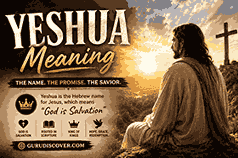
Many believers use the name “Jesus” without knowing its Hebrew roots, missing the depth of its meaning. This disconnect can weaken your grasp of scriptural promises and the identity of the Messiah. This guide uncovers the yeshua meaning from its original language, connecting you to the ancient promise of salvation and the power embedded in His name.
The Original Hebrew Spelling of Yeshua
You cannot grasp the full yeshua meaning until you see the letters. The Hebrew spelling is Yod-Shin-Vav-Ayin (ישוע). Every letter pulses with divine intention.
The Yod represents God’s hand. The Shin and Vav blend into a sound of rescue. The Ayin opens a window into humility and vision. Together, they form a name that scribes recorded with care, and prophets whispered in hope.
Scholars note that the shorter form ישוע appears nearly 30 times in the Hebrew Bible. It is not a late invention. The name walks through the pages of Ezra, Nehemiah, and Chronicles, always tied to individuals who pointed toward deliverance.
What Does Yeshua Mean in the Old Testament?
The yeshua meaning in the Hebrew Scriptures is “salvation,” “deliverance,” or “rescue.” You find the root yasha (ישע) everywhere. It breathes through the Exodus story, the cries of the Psalmists, and the promises of the prophets.
In 1 Samuel 2:1, Hannah prays, “My heart exults in the LORD; my horn is exalted in the LORD… because I rejoice in your yeshuah (salvation).” The word and the name share one bloodstream. When Old Testament believers spoke of God’s saving acts, they pronounced a word that sounded exactly like the Messiah’s name.
Here, the name is not a label. It is a statement. It announces that God steps into human brokenness and carries people out.
Yeshua and Joshua: Are They the Same Name?
This question surfaces often, and the answer deepens the yeshua meaning. Yeshua is a shortened, later form of the name Yehoshua (יהושע), which we translate as Joshua.
Moses gave Hoshea son of Nun the name Yehoshua in Numbers 13:16. He prefixed the divine name Yah to sha, creating “Yahweh is salvation.” By the time of Ezra and Nehemiah, the Aramaic-influenced community shortened Yehoshua to Yeshua. Both the high priest Jeshua in Zechariah 3 and the returning exile in Ezra carry the name.
So Yeshua does not replace Joshua. It condenses the same truth into everyday speech. When the angel spoke to Joseph, he revived the name of the first conqueror of the Promised Land and infused it with eternal weight.
The Linguistic Path from Yeshua to Jesus
Your English “Jesus” travels a long road from Hebrew lips. The yeshua meaning stayed intact even as the sound shifted. Follow the journey:
- Hebrew: Yeshua (ישוע)
- Aramaic: Yeshua
- Greek: Iēsous (Ἰησοῦς) – Greek added the masculine ending *-s*
- Latin: Iesus
- English: Jesus
Greek had no “sh” sound, so the scribes of the Septuagint and New Testament wrote Iēsous. When Jerome translated the Vulgate, he carried Iesus into Latin. English Bibles adopted the Latin form and eventually settled on Jesus. The letters changed shape, but the core meaning stayed locked inside: Yahweh saves.
Primary Source: Gospel of Matthew 1:21, Greek text records the angelic command “καλέσεις τὸ ὄνομα αὐτοῦ Ἰησοῦν” – you shall call his name Iēsous, the Greek equivalent of Yeshua.
Yeshua Meaning in the Context of Salvation (Yasha)
Pull apart the verb yasha, and you touch the heartbeat of the covenant. In Hebrew thought, salvation is not a philosophical idea. It is a physical, emotional, and spiritual rescue from real danger.
When the Psalmist cried, “Save me, O God, by your name” (Psalm 54:1), he used the root yasha. He did not ask for a concept. He begged for the hand that snatches a drowning child from the flood. The yeshua meaning carries that muscular, immediate deliverance into the person of the Messiah.
Every healing, every exorcism, every forgiven sin in the Gospels demonstrates yasha in motion. The name and the action fuse.
Yeshua in the Dead Sea Scrolls and Ancient Texts
Ancient manuscripts anchor the yeshua meaning in physical evidence. The Dead Sea Scrolls, discovered at Qumran, preserve the name Yeshua in multiple fragments.
Primary Source: The Leon Levy Dead Sea Scrolls Digital Library shows the name in 4QJoshuaᵃ, where the successor of Moses is called Yeshua. The scrolls also use the word yeshuah for the salvation expected through the Teacher of Righteousness and the coming Messianic figures.
Josephus, the first-century Jewish historian, mentions several individuals named Jesus (Yeshua) in Antiquities of the Jews. He treats the name as ordinary yet charged with hope. The commonness of the name highlights the startling uniqueness of the one who would fulfill it completely.
Primary Source: Josephus, Antiquities of the Jews, Book 20, Chapter 9 references “Jesus the son of Damneus,” showing Yeshua as a living name in Second Temple Judaism.
Why the Angel Commanded “You Shall Call His Name Yeshua”
Matthew 1:21 records the precise reason: “for he will save his people from their sins.” The angel did not suggest a nice-sounding name. He selected a sentence. The yeshua meaning provided the why behind the who.
Joseph, a devout Jewish man, immediately recognized the echoes of Moses, of the Exodus, of Isaiah’s servant songs. By giving this name, heaven connected the baby in Mary’s womb to every act of deliverance God had ever performed. The name itself was the first gospel proclamation.
You see the intentionality. The name predicts the cross, the resurrection, and the freedom that would burst from an empty tomb. Every time someone called the boy Yeshua in Nazareth, they unknowingly declared what he was born to do.
Yeshua Hamashiach: The Anointed One Explained
Messiah translates the Hebrew Mashiach (משיח), meaning Anointed One. Yeshua Hamashiach ties the yeshua meaning to the long-awaited King, Priest, and Prophet.
Anointing set apart prophets like Elisha, priests like Aaron, and kings like David. Each poured oil on the head. But the Holy Spirit anointed Yeshua without measure. Peter told Cornelius that “God anointed Jesus of Nazareth with the Holy Spirit and with power” (Acts 10:38).
When you say “Yeshua Hamashiach,” you confess that the man who saves is also the one authorized to rule, intercede, and speak the final word. The two titles fuse salvation and sovereignty into one breath.
How Understanding Yeshua Meaning Deepens Prayer and Worship
Praying the name Yeshua can shift your inner landscape. Instead of a distant title, you speak the very sound that disciples used when they woke him in the storm.
- Intimacy: Yeshua feels personal, stripped of centuries of linguistic polish.
- Focus: The meaning “Yahweh saves” refocuses your mind on God’s active deliverance.
- Continuity: You join a stream of Jewish and Gentile worship that stretches back to the Upper Room.
Musicians like Paul Wilbur and Joshua Aaron often weave Yeshua into worship songs. This bridges the ancient and the modern. When you sing or whisper the name, you enter a sacred space where theology becomes breath.
The Name Yeshua in Messianic Prophecy
Prophetic texts plant seeds that flower in the yeshua meaning. Isaiah 12:2 declares, “Behold, God is my salvation (yeshuah); I will trust, and will not be afraid.” The verse uses the very word that would become the name of the Messiah.
Isaiah 62:11 cries, “Behold, your salvation (yeshuah) comes.” Jewish listeners heard more than an event. They heard a person. Simeon, holding the infant Yeshua in the temple, quoted this passage and knew the salvation he held in his arms was the Lord’s yeshuah wrapped in flesh.
The prophecy is not hidden. It lies on the surface of the text, waiting for ears that hear the Hebrew echo.
Yeshua vs. Yehoshua: The Shortened Form and Its Significance
Why the shorter Yeshua instead of the full Yehoshua? The shift occurs during the Babylonian exile, when Aramaic became the common tongue. Post-exilic books like Ezra, Nehemiah, and Chronicles prefer the shorter form.
This linguistic compression does not weaken the yeshua meaning. Instead, it makes the name more accessible. A shortened name fits everyday conversation, yet the root remains. Just as “Josh” carries “Joshua,” Yeshua carries Yehoshua.
God seems content to use the simpler, common form for his Son. This humility matches the incarnation. The supreme salvation comes wrapped in the ordinary name of a first-century Jewish carpenter.
The Power and Authority in the Name Yeshua
The Book of Acts demonstrates that the name carries authority. Peter commands the lame man, “In the name of Jesus Christ of Nazareth, rise up and walk” (Acts 3:6). Demons flee, the sick recover, and the dead rise through this name.
Power does not reside in magic syllables. It resides in the Person who owns the name and the Father who exalts it. Philippians 2:9-10 states that God gave him the name above every name. The yeshua meaning becomes the banner under which every knee bows.
When you speak “Yeshua” in prayer, you invoke the victory of the cross, the vindication of the resurrection, and the promised return of the King. It is not a passive whisper. It is a declaration of war against darkness.
Modern Use of Yeshua in Music, Art, and Culture
Artists and thinkers are rediscovering the yeshua meaning and bringing it into public view.
- Music: Artists like Avion Blackman and congregations worldwide incorporate Yeshua into worship choruses, creating a global sound of reverence.
- Visual Art: Hebrew calligraphy artists paint ישוע on canvases, merging aesthetic beauty with spiritual depth.
- Literature: Scholars such as Dr. Michael L. Brown and the late Dr. David Flusser explore the Jewish roots of the name, educating both academics and lay readers.
This cultural wave reflects a hunger for authenticity. Believers want to touch the original soil from which their faith grew.
Common Misconceptions About the Yeshua Meaning
- “Yeshua is a different God than Jesus.” False. The name simply uncovers the Hebrew foundation of the same Person.
- “You must only use Yeshua to be saved.” Scripture never commands a single language. Romans 10:13 quotes Joel’s promise: whoever calls on the name of Yahweh will be delivered. The heart’s cry matters more than phonetics.
- “Yeshua was an unknown name before modern times.” As shown, Yeshua appears extensively in the Hebrew Bible and Second Temple literature.
- “Yeshua Meaning is vague.” On the contrary, its meaning is more specific than the English Jesus because it remains tied directly to the verb yasha.
Clarifying these points protects you from needless division and opens a path to deeper historical understanding.
At a Glance: Evolution of the Name Yeshua
| Hebrew Form | Transliteration | Meaning | Era / Usage |
| יהושע | Yehoshua | Yahweh is salvation | Moses to early monarchy |
| ישוע | Yeshua | Salvation, deliverance | Exile, Second Temple period |
| Ἰησοῦς | Iēsous | Same meaning, Greek adaptation | New Testament, Septuagint |
| Iesus | Jesus (Latin) | Same meaning | Latin Vulgate, early Church |
| Jesus | Jesus (English) | Same meaning | Modern English Bibles |
This table reveals a single name passing through languages like light through different windows.
FAQs on the Yeshua Meaning
What is the literal yeshua meaning in Hebrew?
The literal meaning is “salvation,” “deliverance,” or “rescue.” It comes from the verb yasha, which depicts God pulling someone out of danger and into safety.
Why do some believers say Yeshua instead of Jesus?
Many choose Yeshua to reconnect with the Jewish context of the Scriptures. Using the original name helps them picture the historical figure who walked Galilee and spoke Hebrew and Aramaic.
Is there biblical evidence for the yeshua meaning?
Yes, extensive evidence. The Hebrew Bible uses yeshuah for God’s saving acts over 70 times. Matthew 1:21 directly links the name to the mission: “for he will save his people from their sins.”
Does praying in the name Yeshua bring more power?
Power comes from the authority of the risen Lord, not from pronunciation. Yet many people find that using Yeshua deepens their sense of intimacy and historical connection in prayer.
Was Yeshua a common name in first-century Israel?
Yes, it was relatively common. Historical records and ossuary inscriptions show other men named Yeshua. The commonness sharpens the distinction: this Yeshua alone embodied the full weight of the name.
How does the yeshua meaning connect to Old Testament salvation?
The name shares the root of the Hebrew word for salvation. Every time the Old Testament speaks of God’s yeshuah, it anticipates the person who would incarnate that deliverance.