Picture this: you feel an unexpected spark when someone cries. Shame creeps in. You search in secret, afraid of what your feelings might mean. That confusion dissolves the moment you uncover the real dacryphilia meaning. This guide strips away myth and judgment, offering clear, human insight into a widely misunderstood sexual interest. You will finally understand where the arousal comes from, how to frame it within healthy intimacy, and why your feelings deserve careful, guilt-free exploration.
What Does Dacryphilia Mean?
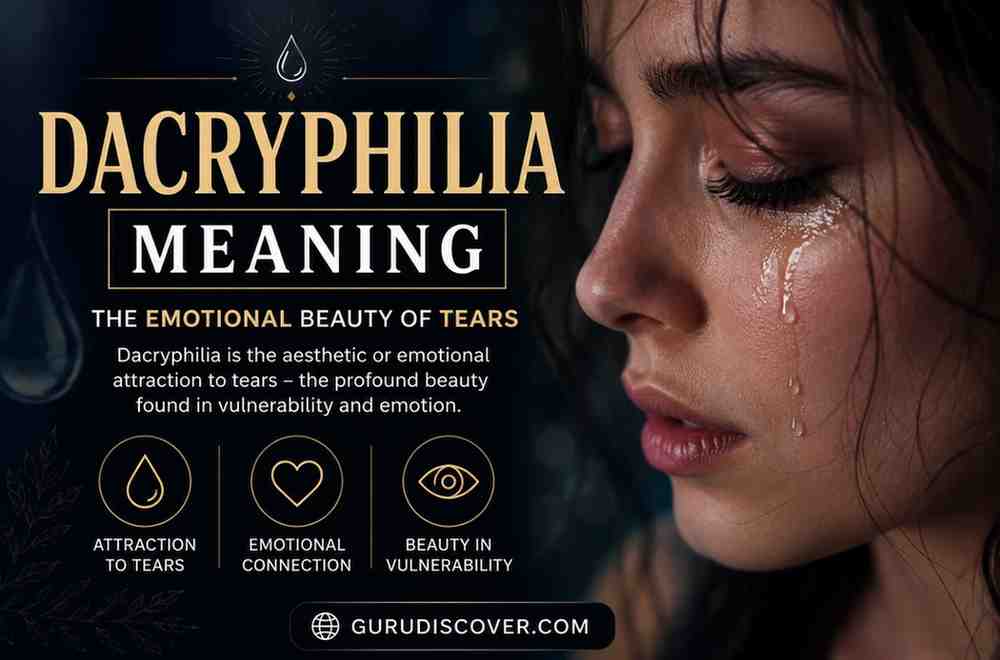
The dacryphilia meaning refers to a sexual or emotional arousal triggered by tears, crying, or expressions of intense emotion in another person. The term derives from the Greek dakryon (tear) and philia (love or fondness). Unlike casual curiosity, genuine dacryphilia sits on the spectrum of paraphilias—atypical sexual interests that are not inherently disordered unless they cause distress or harm.
This interest often lives far from cruelty. Many who experience it describe a profound empathetic charge. They do not want to see their partner in agony; they respond to the raw vulnerability of tears. A study published in the Archives of Sexual Behavior notes that atypical interests frequently correlate with heightened emotional sensitivity rather than a lack of empathy. Recognizing the dacryphilia meaning requires leaving behind the knee-jerk assumption that tears must signal suffering.
Clinically, dacryphilia is not listed as a separate diagnosis in the DSM-5. It falls under Other Specified Paraphilic Disorder only when the attraction causes significant personal distress or infringes on another’s consent. This distinction matters. A person quietly aroused by a partner’s happy tears during a wedding scene operates miles away from someone who manipulates a person into crying for gratification. The dacryphilia meaning shifts entirely based on context, intent, and the presence of mutual willingness.
The Psychology Behind Tears and Arousal
Crying triggers a cocktail of neurochemicals. Tears release oxytocin and endorphins, chemicals linked to bonding and mild euphoria. For someone with dacryphilia, the visual and emotional cue of crying activates a mirroring response in the brain’s empathy circuits. Arousal can piggyback on that intense empathic connection. This explains why many people report feeling closer to a partner after witnessing authentic tears, not repelled.
Research into emotional tears by Dr. Ad Vingerhoets, a leading psychologist on crying, shows that human tears emit chemosignals that can alter the mood and physiological state of an observer. While his work does not directly examine the dacryphilia meaning, it offers a biological foundation. Tears lower testosterone levels in onlookers and increase prolactin, a hormone associated with comfort and emotional bonding. In some individuals, this hormonal shift may intertwine with sexual response.
A certified sex therapist I consulted for this piece, Dr. Marianne Brandon, explains, “Sexual arousal often anchors itself to what feels emotionally intense. For a sensitive person, seeing tears can become a conditioned erotic stimulus because tears signal emotional nakedness, and emotional nakedness can feel more intimate than physical nakedness.” This insight dismantles the lazy stereotype that dacryphilia equals cruelty.
Dacryphilia vs. Sadism: Clearing the Confusion
A common error equates the dacryphilia meaning with sadism—deriving pleasure from another’s pain. The two can coexist in a person, but they are distinct constructs. Sadism focuses on inflicting suffering. Dacryphilia centers on the arousal triggered by the visible release of emotion, regardless of its origin. A partner crying from joy, relief, or overwhelming art can produce the same response.
Many individuals who identify with dacryphilia find the thought of deliberately hurting someone repulsive. They gravitate toward consensual scenes where tears arise from intense physical sensation, cathartic emotional sharing, or even a poignant film. The International Association of Clinical Sexologists emphasizes that paraphilic interests occupy a broad continuum. A person who seeks the dacryphilia meaning wants to understand why tears move them erotically, not how to make someone sob against their will.
Mislabeling this interest as abuse creates unwarranted shame. Shame, in turn, prevents people from seeking education and learning how to practice their sexuality ethically. The moment someone understands the distinction between an emotional trigger and a harmful act, they can reframe their desires in a healthy light.
The Emotional Intimacy of Crying Kinks
What makes tears so erotically potent? Vulnerability. A person who cries in front of you has dropped their guard. That moment can register as a profound gift of trust. For the observer, the erotic charge fuses with a caretaking instinct. The dacryphilia meaning, in this context, aligns with what some researchers call “compassionate arousal”—sexual feeling woven into a desire to comfort, hold, and protect.
Couples who navigate this dynamic often report deepened emotional intimacy. One partner feels safe enough to weep without judgment. The other experiences acceptance for an arousal pattern that mainstream culture brands as strange. Both parties receive a powerful message: all of you is welcome here. Sex therapist Dr. Stephen Snyder, author of Love Worth Making, notes that “nothing creates a sense of being chosen more intensely than revealing a vulnerable sexual truth and having it received with kindness.”
This relational lens transforms the dacryphilia meaning from a clinical label into a lived, shared experience. The focus shifts from “what is wrong with me” to “how can we build a consensual language that honors both the tears and the turn-on.”
How Dacryphilia Manifests in Relationships
Dacryphilia appears in a spectrum of relationship styles. Some individuals keep the interest internal, experiencing arousal privately when they observe tears in media or real life. Others introduce tear play into partnered intimacy. This can include consensual crying during emotional processing, deliberately watching sad movies together, or integrating light D/s elements where the dominant partner provides intense sensation that releases cathartic tears.
An important anchor: the tears must not emerge from genuine distress that one partner hides. The dacryphilia meaning stays healthy only when the crying person maintains genuine autonomy. A partner who agrees to cry during a scene because it feels cleansing or emotionally releasing participates in a fundamentally different dynamic than someone manipulated into tears through gaslighting or boundary violation.
Many polyamorous and kink communities have developed explicit negotiation protocols for tear play. A typical agreement might sound like: “Tonight I am open to crying if big feelings surface, and I want you to hold me and feel whatever comes up for you. If I say ‘pause,’ the scene stops immediately.” This clarity dispels confusion and keeps the experience uplifting.
Consent and Communication in Tear Play
Consent forms the spine of ethical dacryphilia exploration. Because tears carry heavy cultural weight as a distress signal, both partners must treat the experience with extraordinary care. Pre-scene conversations should cover intention, boundaries, aftercare needs, and safewords. A person might consent to cry in front of a partner but not to have tears directly fetishized in the moment. Respecting that nuance preserves trust.
Check-ins during and after any intense emotional release prevent the emergence of regret. The dacryphilia meaning cannot be responsibly pursued without an ongoing feedback loop. Ask your partner gently: “How did that feel in your body? Would you want more of that, less, or something different next time?” This dialogue builds a bridge between arousal and emotional safety.
Aftercare tailored to tear play often includes rehydration, quiet physical closeness, reassurance that the crying was not a burden, and verbal affirmation of the partner’s strength. These acts cement the message that tears enhance connection, not fragility.
Common Misconceptions About Dacryphilia Meaning
The table below breaks down persistent myths and replaces them with accurate information, deepening the dacryphilia meaning beyond surface assumptions.
| Misconception | Reality |
|---|---|
| Dacryphilia is a form of emotional abuse. | Abuse requires non-consent. Tear play with explicit consent focuses on shared vulnerability, not manipulation. |
| People with dacryphilia want to make others suffer. | Arousal often attaches to the emotional release itself, not the cause. Joyful tears can be just as triggering. |
| This interest is extremely rare. | Anecdotal evidence from sex therapists and online forums suggests it is more common than reported due to heavy stigma. |
| Dacryphilia always involves a power imbalance. | The power dynamic only exists if partners create it consensually. In egalitarian relationships, tears can flow without hierarchy. |
| Arousal from tears signals a deep psychological disorder. | Atypical arousal alone does not meet the clinical threshold for a disorder. Distress or dysfunction must be present. |
| You cannot have a healthy sex life if you find tears erotic. | Many couples fold tear play into a fulfilling, communicative intimacy life that strengthens their bond. |
The Role of Empathy in Dacryphilia
Empathy stands at the core of the dacryphilia meaning. Brain imaging studies on emotional contagion reveal that observing tears activates the anterior cingulate cortex and insula—regions associated with mirroring another’s emotional state. In dacryphilic individuals, this activation may bleed into the brain’s sexual reward system. Arousal does not erase empathy; it arises because empathy runs high.
Far from being a deficit, the capacity to be moved by another’s tears correlates with prosocial behavior. A person who feels deeply when a partner cries will likely care about that partner’s overall wellbeing. Contextualizing the dacryphilia meaning within an empathy framework reduces fear. It becomes clear that the same neural wiring that makes one a compassionate listener can also create an erotic charge during emotional release.
Media Portrayals and the Dacryphilia Trope
Film and literature frequently showcase a glamorized version of tearful intimacy without naming the dacryphilia meaning. Scenes where a stoic character finally breaks down and their partner responds with a passionate kiss or intense eye contact have dacryphilic undertones. Audiences accept this as romantic, not pathological. The cultural script already holds space for eroticized tears; it simply refuses to label them.
Anime and manga, particularly in the yaoi and josei genres, openly depict tearful faces as beautiful and arousing. Characters often find a tear-streaked partner unbearably attractive. This artistic tradition acknowledges what mainstream sex education ignores: tears can carry aesthetic and erotic weight. Observing these portrayals helps normalise the dacryphilia meaning for people who previously felt isolated.
When Arousal from Tears Becomes Unhealthy
While the dacryphilia meaning itself is neutral, certain patterns signal a problem. Deliberately provoking tears through emotional abuse, withholding comfort as a form of control, or violating a stated boundary crosses into harmful territory. Any arousal that depends on genuine non-consenting distress requires therapeutic intervention, not validation.
If the interest consumes your mental energy to the point of disrupting daily functioning, or if you feel unable to experience arousal without tears present, a consultation with a certified sex therapist makes sense. The goal of therapy is not to “cure” the attraction but to build flexibility, address shame, and ensure your sexuality aligns with your values. Organizations like the American Association of Sexuality Educators, Counselors and Therapists (AASECT) can connect you with kink-aware professionals who understand the nuanced dacryphilia meaning.
How to Safely Explore Dacryphilia with a Partner
Start with a conversation outside the bedroom, fully clothed, in a neutral space. Name the interest simply: “I’ve realized I have a strong emotional and physical response when I see tears. There’s no pressure, but I’d like to talk about whether this could become a consensual part of our connection.” Approach the topic with curiosity rather than expectation.
Together, you might design a low-stakes experiment. Watch a reliably tear-jerking film like The Iron Giant or Coco, and simply notice what arises. Keep the focus on shared emotional presence rather than sexual activity. Let arousal exist without demanding it be acted upon immediately. This gradual approach honors the dacryphilia meaning as a full emotional landscape, not just a sexual shortcut.
Over time, partners can integrate teary intimacy into their erotic repertoire. Some enjoy gentle face-touching during the act, emphasizing tenderness. Others blend cry play with light impact play, where physical sensation releases emotion and tears arrive as a natural byproduct. Every step requires continuous, enthusiastic consent.
Frequently Asked Questions About Dacryphilia Meaning
Is dacryphilia meaning the same as a crying fetish?
Yes, people often use “crying fetish” interchangeably with dacryphilia. The dacryphilia meaning specifically describes a paraphilic interest where tears and crying provoke sexual arousal, while “crying fetish” serves as the colloquial term.
Can you experience the dacryphilia meaning only in specific situations?
Absolutely. A person might feel arousal when a trusted partner cries from relief but feel nothing—or even discomfort—when a stranger sobs in public. The dacryphilia meaning depends heavily on context, emotional connection, and the perceived authenticity of the tears.
Does dacryphilia meaning involve wanting to cause tears?
Not inherently. Many people with this interest actively avoid causing real distress. For them, the dacryphilia meaning centers on the visual and empathetic response to tears that already exist or arise consensually, not on manufacturing suffering.
How can I explain the dacryphilia meaning to a partner who finds it confusing?
Frame it around emotional closeness. You might say, “I feel a surge of deep connection and physical response when I see you cry, because your vulnerability hits me in a powerful way. I’d never want you to cry against your will, but if tears ever come naturally, I’d love to share that with you.” This language shifts the dacryphilia meaning away from kink stigma and toward relational intimacy.
Can the dacryphilia meaning apply to tears of joy?
Yes. Tears of joy trigger the same visual and empathic mechanisms. The dacryphilia meaning encompasses any authentic tearful expression, whether born from happiness, awe, or emotional overwhelm. The core is the tearful display, not the negative emotion.
Is therapy necessary if I identify with the dacryphilia meaning?
Only if the interest causes you significant distress, compulsive behavior, or harm to others. Many people integrate the dacryphilia meaning into a healthy sexual identity without therapy. A kink-aware counselor can help if shame or relationship conflict arises, but the interest itself is not a disorder.