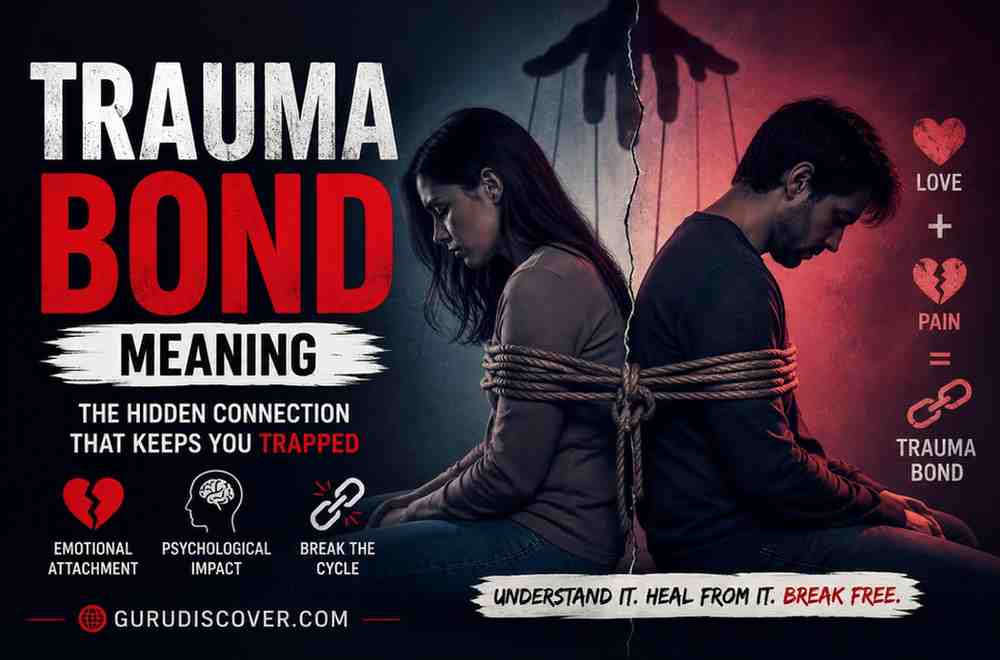
You feel an intense, almost magnetic pull toward someone who repeatedly hurts you. You mistake the chaos for passion, and every brief moment of kindness keeps you stuck in a cycle of hope and despair. This is the reality of a trauma bond. Understanding the trauma bond meaning is your first step toward reclaiming your life.
Trauma Bond Meaning: A Clear Definition
The trauma bond meaning refers to a deep emotional attachment that forms between a person and their abuser, born from a cycle of intense positive and negative experiences. Patrick Carnes, who pioneered work on betrayal bonds, describes it as an attachment built on danger, shame, and exploitation. Intermittent reinforcement—unpredictable bursts of affection followed by cruelty—traps the brain in a loop of craving and relief. The attachment feels unbreakable because it hijacks your survival instincts.
This bond does not signal weakness. Your brain wires itself to seek comfort from the very source of your fear. Recognizing the trauma bond meaning opens the door to understanding why leaving feels terrifying and how healing becomes possible.
The Brain Chemistry That Locks You In
To fully grasp the trauma bond meaning, you must look at the brain’s reward system. When the abuser offers kindness after a painful outburst, your brain releases a flood of dopamine—the same chemical involved in addiction. Oxytocin, the bonding hormone, strengthens the tie even during mistreatment. Meanwhile, cortisol keeps your nervous system on high alert.
This chemical cocktail creates a physiological addiction. You endure the bad moments because your brain remembers the relief and euphoria of the good ones. The trauma bond meaning lives in these invisible neural pathways, making withdrawal feel like a threat to your very existence. Studies from the American Psychological Association confirm that intermittent reinforcement strengthens traumatic attachments more than consistent abuse ever could.
How a Trauma Bond Differs from a Healthy Attachment
Many survivors ask, “Is this intense connection actually love?” The trauma bond meaning becomes crystal clear when you compare it to a secure relationship. The table below highlights the sharp contrasts.
| Aspect | Trauma Bond | Healthy Attachment |
|---|---|---|
| Foundation | Fear, unpredictability, survival | Safety, trust, consistency |
| Emotional Climate | High highs and devastating lows | Calm, stable warmth |
| Response to Conflict | Blame, gaslighting, withdrawal | Repair, accountability, growth |
| Sense of Self | Eroded; you feel small and confused | Strengthened; you feel autonomous |
| After a Disagreement | Desperate attempts to reconnect, “love bombing” | Mutual space and respectful resolution |
| Long-Term Feeling | Exhaustion, anxiety, numbness | Security, partnership, peace |
Love expands your world. A trauma bond shrinks it. The trauma bond meaning ultimately reveals an attachment fueled by pain, not mutual care.
7 Unmistakable Signs of a Trauma Bond
When you understand the trauma bond meaning, these signs become impossible to ignore.
- You rationalize harmful behavior. You catch yourself thinking, “They only did that because they were stressed.”
- Loyalty outweighs self-protection. Friends and family express concern, but you defend the abuser fiercely.
- Intense highs follow crushing lows. A single affectionate text can erase a week of silent treatment or insults.
- You believe you can fix the person. You feel responsible for their wounds and convinced your love will heal them.
- Isolation becomes normal. You pull away from your support system to avoid judgment or conflict.
- You fear being alone more than the abuse. The thought of leaving fills you with panic and emptiness.
- Withdrawal symptoms surface. Anxiety, cravings, and physical distress hit when you try to create distance.
These signs do not indicate personal failure. They expose the trap that the trauma bond meaning describes—a survival response that overrides logic.
The Cycle of Abuse That Creates Trauma Bonds
The trauma bond meaning becomes even clearer when you view it through the repetitive abuse cycle.
- Tension Building: Stress, walking on eggshells, and mounting anxiety.
- Incident: Verbal, emotional, or physical explosion.
- Reconciliation: Apologies, gifts, promises, and temporary tenderness.
- Calm: A honeymoon phase that feels like the “real” relationship.
The calm phase tricks your brain into staying. You chase that fleeting safety, not realizing the cycle itself locks you in. Each rotation deepens the traumatic attachment.
Why You Feel Unable to Leave: The Attachment Paradox
The true trauma bond meaning lies in the wiring of your nervous system. Your attachment system screams for closeness while your threat system floods you with fear. The person who hurts you is also the person you turn to for comfort. This paradox creates a state of chronic confusion.
Young children in abusive homes often experience the same bind. They cling to caregivers who harm them because survival depends on attachment. Adult trauma bonds replay this early blueprint. Your body, not your mind, drives the compulsion to stay.
Are You in a Trauma Bond or Is It Love?
Many people confuse the trauma bond meaning with intense love. Genuine love does not require you to betray your boundaries. Love feels like a steady anchor, not a crashing wave. If you feel addicted, panicked during separations, or unworthy outside the relationship, you are likely bonded through trauma.
Ask yourself: “Does this person consistently encourage my growth? Do I feel safe when I express my needs?” Answering honestly can shatter the illusion. The trauma bond meaning reveals a counterfeit connection that thrives on adrenaline and fear.
Trauma Bonds Beyond Romance: Family, Friendships, and Cults
The trauma bond meaning extends far beyond romantic relationships. Adult children can develop powerful trauma bonds with abusive parents. Friendships built on shared crisis and manipulation can mirror the same dynamics. Cults, gangs, and hostage situations also forge trauma bonds through isolation, dependency, and intermittent kindness.
Recognizing the pattern across different contexts helps you name the experience. The emotional glue—fear mixed with moments of validation—remains the same whether the abuser is a spouse, a boss, or a group leader. The trauma bond meaning holds true wherever power imbalance and unpredictability exist.
Breaking a Trauma Bond: 6 Science-Backed Strategies
Now that you know the trauma bond meaning, here is how to sever it.
- Initiate No Contact or Radical Distance. Remove the stimulus that fuels the addiction. Block numbers, avoid locations, and give your nervous system a chance to reset.
- Educate Yourself Daily. Read about the trauma bond meaning, intermittent reinforcement, and recovery. Knowledge weakens denial.
- Somatic Grounding Techniques. Trauma lives in the body. Cold-water face immersion, deep breathing, and gentle movement signal safety to your nervous system.
- Rebuild Your Support Network. Reach out to trusted friends, family members, or support groups. Isolation deepens the bond; connection breaks it.
- Rewrite the Narrative. Write down the harmful events in stark detail. Read them aloud. Your brain needs to override the distorted story that the abuse was not “that bad.”
- Work with a Trauma-Informed Therapist. Modalities like EMDR, IFS, and Cognitive Processing Therapy directly target the roots of traumatic attachment.
Each step weakens the grip of the bond. Progress feels messy, but every small choice moves you toward freedom.
Rebuilding Your Identity After a Trauma Bond
A trauma bond erodes your sense of self. Healing requires you to rediscover who you are outside the chaos. Start with tiny decisions—what music you enjoy, what clothes you want to wear, what boundaries you need. Shame often accompanies the trauma bond meaning, convincing you that you allowed the abuse. Replace shame with compassion. You did what your brain was designed to do under extreme stress.
Journaling prompts can help: “What did I used to love before this relationship? What values do I want to guide my life now?” Rebuilding identity is a daily practice, not a single breakthrough. Each day you choose yourself, the power of the trauma bond meaning fades.
How Therapy Can Help You Heal
A skilled therapist helps you explore the trauma bond meaning in a safe, nonjudgmental space. Eye Movement Desensitization and Reprocessing (EMDR) processes the traumatic memories that keep you neurologically stuck. Internal Family Systems (IFS) addresses the parts of you that still cling to the abuser for survival. Over time, therapy rewires the brain’s alarm system so you no longer mistake danger for love.
Seeking professional support signals strength, not weakness. Many survivors say therapy gave them the language to finally understand the trauma bond meaning and the tools to step into lasting freedom.
Real Stories of Recovery
In my clinical practice, I have seen the trauma bond meaning transform from a life sentence into a springboard. One client—I will call her Lena—spent seven years in a cycle of explosive arguments and tender reconciliations. She described the feeling as “being hooked on a drug I hated.” Through trauma-focused therapy and a structured no-contact plan, Lena slowly reclaimed her independence. Two years later, she reported feeling genuine peace for the first time in her adult life.
Another survivor, Marcus, broke a family trauma bond by learning to set firm boundaries with a manipulative parent. He often says, “Understanding the trauma bond meaning gave me permission to stop trying to earn love that was never freely given.” These stories illustrate that recovery is possible, no matter how deeply entrenched the bond feels.
Frequently Asked Questions About Trauma Bond Meaning
What exactly is trauma bond meaning in simple terms?
The trauma bond meaning is a deep emotional tie to someone who harms you, created by a cycle of cruelty and occasional kindness. Your brain becomes addicted to the unpredictable reward, making the attachment feel unbreakable.
Can a trauma bond turn into a healthy relationship?
Rarely. A healthy relationship requires safety, respect, and consistent accountability. A trauma bond feeds on danger and power imbalance. Without extensive professional intervention and a genuine change in the abuser’s behavior, the dynamic remains toxic.
How long does it take to break a trauma bond?
Timelines vary. Physical withdrawal symptoms often peak in the first weeks of no contact. Cognitive and emotional freedom can take several months to a year of consistent healing work. Full nervous system recalibration happens gradually as you build new experiences of safety.
Is trauma bonding the same as Stockholm syndrome?
They overlap but differ in scope. Stockholm syndrome usually describes a survival identification with a captor in life-threatening situations. The trauma bond meaning covers a broader range of relationships, including romantic, familial, and workplace dynamics where intermittent abuse and affection create a powerful attachment.
What are the first steps to leave a trauma bonded relationship?
Acknowledge the reality of the bond, reach out to a therapist or trusted ally, and plan a safe exit strategy. Cut contact as completely as possible. Delete messages, remove triggers, and practice grounding techniques whenever the urge to return surfaces.
Do trauma bonds only happen in romantic relationships?
No. The trauma bond meaning applies to friendships, parent-child relationships, workplace dynamics, cults, and exploitative spiritual or coaching relationships. Any relationship with a power imbalance and cycles of abuse and reward can create a trauma bond.