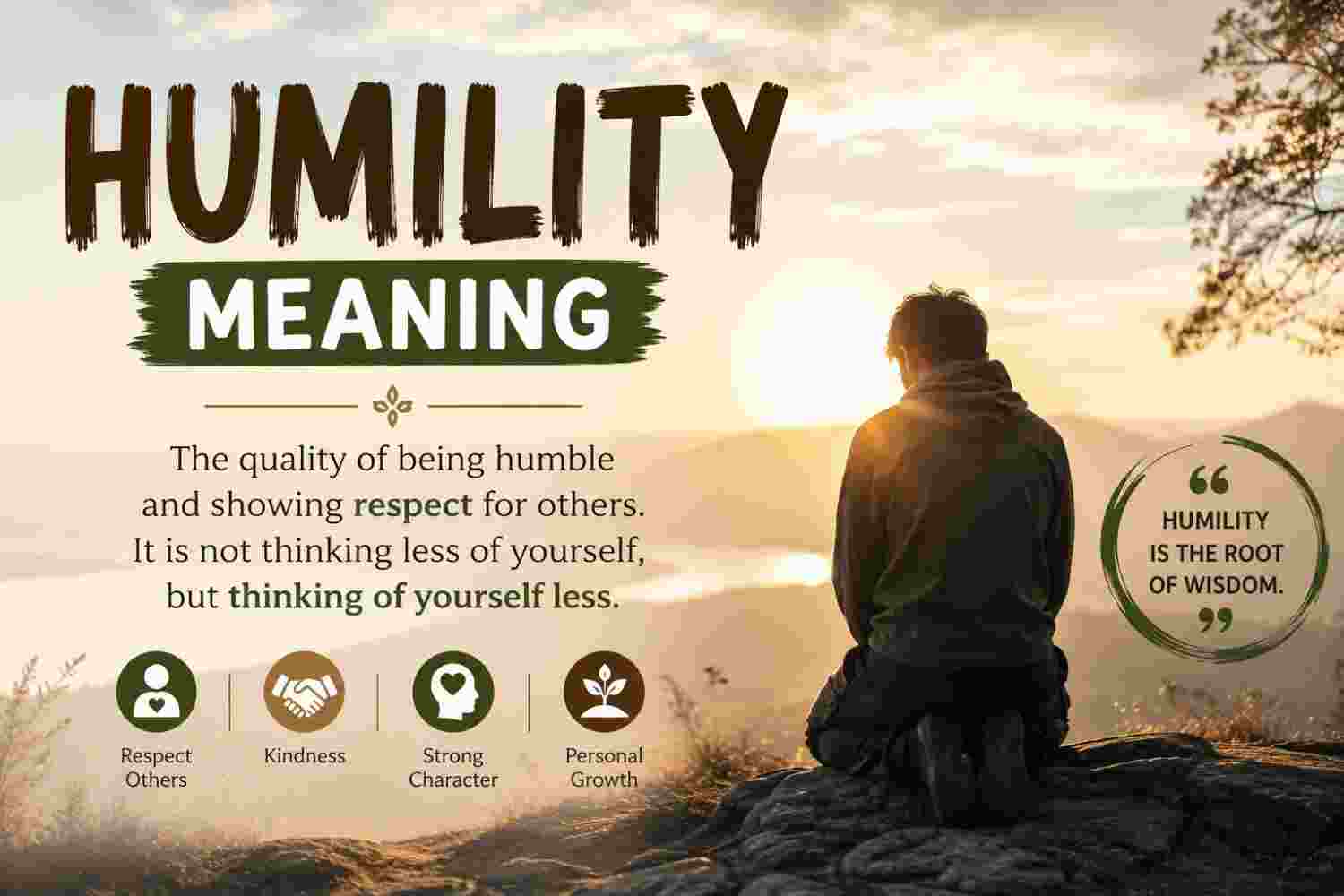
Many people mistake humility for weakness, shyness, or low self-worth. That confusion keeps them stuck in pride, defensiveness, or people-pleasing. But the real humility meaning points to quiet strength and clear self-awareness. This guide defines humility, explores its psychological roots, and gives you practical ways to build it in daily life, work, and relationships.
What Does Humility Actually Mean?
Humility is not self-hatred or low confidence. It is an accurate view of yourself—your strengths, limits, and place in a wider community. The American Psychological Association defines humility as an unselfish quality that involves recognizing your own abilities and limitations without arrogance or false modesty. That definition removes the shame many people attach to the word.
Core components of humility include:
- Accurate self-assessment: You know what you do well and where you need help.
- Low self-focus: You spend less energy protecting your ego.
- Openness to others: You see value in other people’s knowledge and experience.
- Teachability: You accept that you do not have all the answers.
Humility vs Pride: Key Differences
Pride says, “I already know.” Humility says, “I can learn more.” Pride demands recognition; humility gives credit. Pride reacts to criticism with defensiveness; humility responds with curiosity.
- Pride: Seeks status, hides mistakes, dismisses feedback.
- Humility: Seeks growth, admits mistakes, invites feedback.
- Pride: Compares and competes.
- Humility: Connects and collaborates.
The Psychology Behind True Humility
Psychologists link humility meaning to secure self-esteem and lower defensiveness. Mark Leary, Ph.D., a social psychologist at Duke University, describes humility as low self-focus plus a willingness to see yourself accurately. You do not need to think less of yourself; you think about yourself less often.
Leary’s research shows humble people handle disagreement better and form stronger social bonds. They do not crumble when someone points out a flaw. They pause, assess, and adjust.
Intellectual Humility Meaning and Why It Matters
Intellectual humility meaning is the habit of recognizing that your knowledge is limited and your beliefs may be wrong. It does not mean lacking convictions. It means treating your opinions as testable ideas rather than fixed identities.
The Greater Good Science Center at UC Berkeley describes intellectual humility as a willingness to accept that your beliefs might be incorrect. That openness protects you from overconfidence and keeps your mind flexible.
- Ask: “What evidence would change my mind?”
- Separate your ego from your ideas.
- Welcome correction from people with different backgrounds.
- Admit when you do not know something.
Cultural Humility in a Connected World
Cultural humility involves lifelong learning about other cultures and recognizing your own cultural lens. It asks you to listen before judging and to respect differences without needing to be an expert.
- Let others define their own experience.
- Ask questions instead of making assumptions.
- Accept that you will make mistakes and repair them.
- Stay curious about traditions, values, and histories.
7 Real Benefits of Living the Humility Meaning
When you live the humility meaning, you gain practical advantages in almost every area of life.
- Stronger relationships: People trust you when you listen and admit fault.
- Faster learning: You seek feedback and treat mistakes as data.
- Better leadership: Teams feel safe to speak up.
- Less stress: You stop defending an inflated ego.
- Greater resilience: You bounce back from failure without shame.
- Deeper empathy: You see others as full, complex people.
- More genuine confidence: You no longer need constant approval.
How to Practice Humility Meaning Daily
Practice turns humility meaning from an idea into a habit. Start with small, repeated actions.
- Ask one open-ended question before giving your opinion.
- Write down a mistake you made and what it taught you.
- Thank someone who contributed to your success.
- Say “I was wrong” out loud once this week.
- Pause before correcting someone. Ask if the correction matters.
- Seek feedback from one person you trust.
- Reflect on your advantages and how they shaped your path.
Humility Meaning in Leadership and Teams
Leaders who embody this quality share credit, admit uncertainty, and invite honest input. This builds psychological safety, which teams need to surface problems early and innovate without fear.
- Replace blame with learning.
- Ask “What did we miss?”
- Let quieter team members speak first.
- Publicly praise contributions you did not make.
Humility Meaning in Relationships and Family
In close relationships, true humility shows up as active listening, sincere apologies, and letting go of the need to win every argument. You listen to understand, not to prepare your rebuttal.
- Repeat back what you heard before responding.
- Apologize without adding “but.”
- Let your partner or child teach you something new.
- Validate feelings even when you disagree.
False Humility vs True Humility Meaning
False humility is a performance. It sounds like, “Oh, I am not that good,” while fishing for praise. True humility is quiet, consistent, and focused on others.
- False humility: Downplays strengths to get validation.
- True humility: Acknowledges strengths without needing applause.
- False humility: Hides behind self-criticism.
- True humility: Owns both gifts and gaps.
- False humility: Centers the self through modesty.
- True humility: Forgets the self enough to serve.
Common Myths About Humility Meaning
Several myths keep people from embracing humility meaning.
- Myth: Humility means low self-esteem.
Fact: It pairs with secure self-worth. - Myth: Humble people never assert themselves.
Fact: They speak clearly but listen first. - Myth: Humility makes you a pushover.
Fact: It gives you the strength to accept limits and set kind boundaries. - Myth: You lose ambition.
Fact: Humble people can be highly driven; they just do not need all the credit.
Teaching the Humility Meaning to Children and Teens
Children learn humility meaning through modeled behavior more than lectures. Praise effort and honesty, not just outcomes. Let them see adults admit mistakes and apologize.
- Model saying “I don’t know” and “I was wrong.”
- Ask your child to explain something you do not understand.
- Encourage gratitude practices at dinner.
- Read stories where characters grow through failure.
- Avoid comparing siblings or classmates.
Detailed Table: Humility Meaning Across Contexts
| Context | What Humility Looks Like | Common Misunderstanding | Real-Life Example |
|---|---|---|---|
| Personal growth | Accurate self-assessment; you see strengths and limits. | Thinking you lack confidence. | You ask for feedback without feeling threatened. |
| Intellectual | Knowing your knowledge has limits; changing your mind with new evidence. | Indecisiveness. | You say “I was wrong” after reading new research. |
| Cultural | Respecting other cultures; recognizing your lens is partial. | Losing your own values. | You listen to a colleague’s cultural perspective before judging. |
| Leadership | Giving credit, sharing power, admitting mistakes. | Weak leadership. | A manager publicly praises the team and owns a failed launch. |
| Relationships | Listening deeply and apologizing sincerely. | Being a doormat. | You pause a heated argument to say “Tell me more.” |
| Spiritual | Seeing yourself as part of something larger. | Low self-worth. | You serve others without needing praise. |
FAQs About Humility Meaning
What is humility meaning in simple words?
Humility meaning is seeing yourself accurately, acknowledging your limits, and valuing others without self-deprecation.
How can humility improve my life?
It reduces defensiveness, strengthens relationships, and increases learning because you stay open to feedback and new ideas.
Is humility the same as low self-esteem?
No. Low self-esteem involves a negative self-view. Humility involves a secure, accurate view of yourself, including strengths and weaknesses.
Can humility help at work?
Yes. Leaders who practice humility build psychological safety, invite honest feedback, and make better team decisions.
What is false humility?
False humility is performative modesty, like downplaying your skills to get praise. True humility is quiet and consistent.
How do I practice humility every day?
Ask questions, admit mistakes quickly, listen without planning your reply, and thank others for their contributions.
Start Practicing Humility Today
Understanding humility meaning is the first step. The next step is practice. Choose one action from this guide today: ask a real question, admit a mistake, or thank someone who helped you succeed. Quiet strength grows in small, consistent choices. Start now, and watch your relationships, leadership, and peace of mind shift.