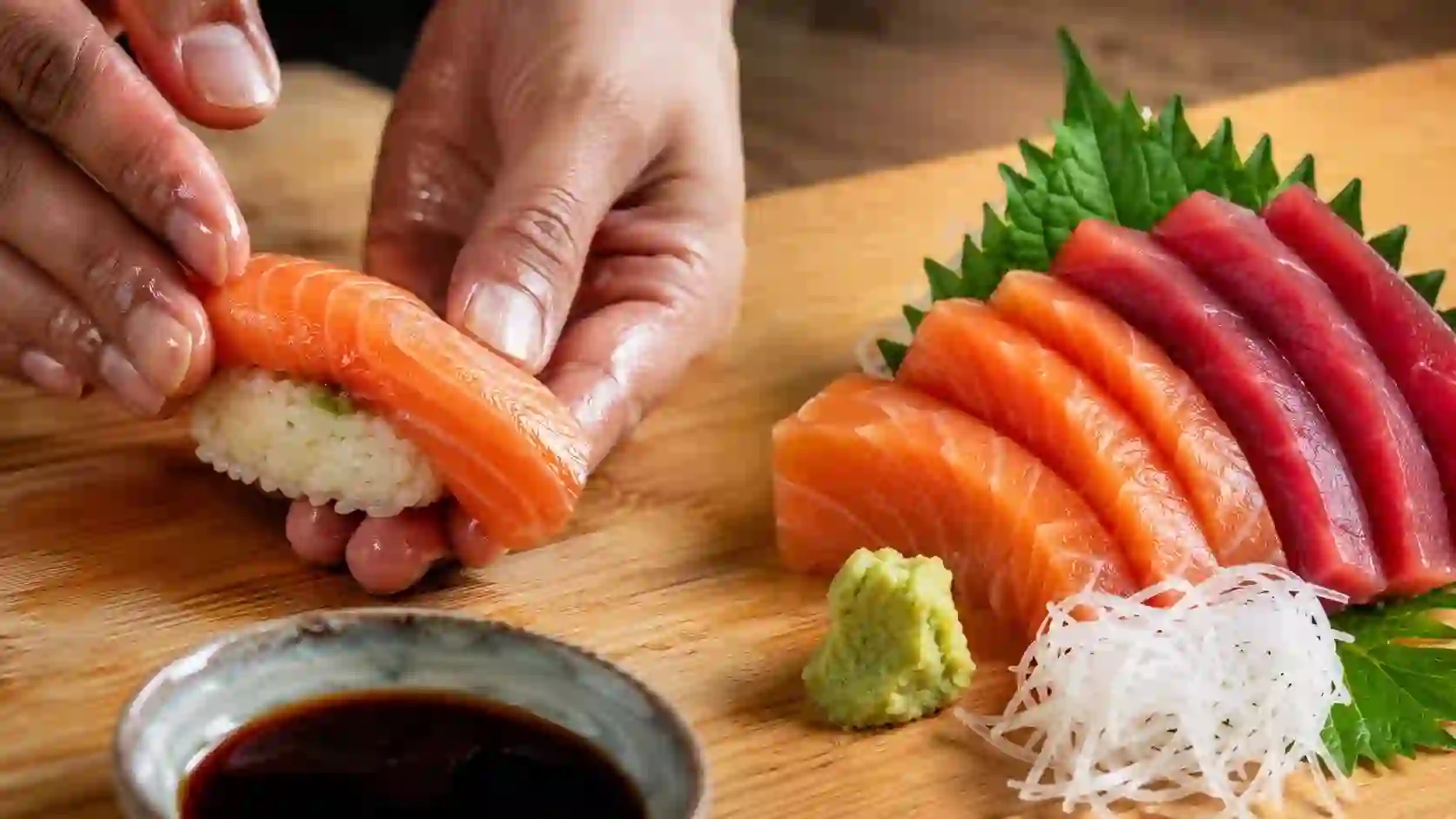
Nigiri vs Sashimi
You’re standing at a sushi counter, menu in hand, and two sections are staring back at you: nigiri and sashimi. Both look like elegant little pieces of raw fish. Both come with wasabi and soy sauce on the side. So why are they listed separately — and which one should you actually order?
The short answer comes down to one ingredient: rice. Nigiri and sashimi are two distinct Japanese dishes, and once you know what separates them, you’ll never second-guess a sushi menu again. This guide breaks down the differences in plain English, with a quick-reference table, nutrition comparison, and ordering tips you can use the next time you sit down at the sushi bar.
Key Takeaways
- Nigiri is a hand-pressed sushi made of vinegared rice topped with a slice of fish or other seafood. Sashimi is simply expertly sliced raw fish or seafood, served on its own with no rice at all.
- The fastest way to tell them apart: if you see a small rice pillow underneath the fish, it’s nigiri. If it’s pure, glistening slices of fish with nothing under them, it’s sashimi.
- Nigiri is technically a type of sushi. Sashimi is not sushi at all — sushi, by definition, includes vinegared rice, and sashimi has none.
- Sashimi is essentially carb-free and protein-dense per bite, while nigiri adds a small amount of carbohydrate and natural sugar from the seasoned rice.
What Is Nigiri?
Nigiri (short for nigirizushi) is a hand-pressed sushi made of an oblong mound of vinegared rice topped with a slice of raw or cooked seafood, sometimes secured with a thin strip of nori seaweed.
The style is generally traced back to Edo-period Tokyo (1603–1868), when it developed as a fast, fresh form of street food — a precursor to today’s “Edomae” (Edo-style) sushi that’s still considered the gold standard in many high-end sushi restaurants. Sushi chefs at the time pressed rice by hand into bite-sized portions that could be eaten quickly, topped with whatever fish was fresh that day.
A small amount of wasabi is traditionally dabbed between the rice and the topping rather than mixed into soy sauce, which both seasons the fish and helps it adhere to the rice. The rice itself, known as shari, is seasoned with a blend of rice vinegar, sugar, and salt and shaped by hand into its signature oval form — a process that takes years of practice to get exactly right.
Common nigiri toppings (called neta) include:
- Sake (salmon)
- Maguro (tuna)
- Ebi (cooked shrimp)
- Tamago (sweet egg omelet)
- Unagi (grilled freshwater eel, glazed with sauce)
Two popular variations are worth knowing:
- Gunkan-maki (“battleship roll”) — a nigiri-style rice base wrapped in a collar of nori to hold loose toppings like roe or chopped tuna in place.
- Aburi (seared) nigiri — the topping is lightly torched, adding a smoky char and softer texture to fish like salmon or scallop.
What Is Sashimi?
Sashimi is a Japanese dish of expertly sliced raw fish or seafood served without rice, typically accompanied by soy sauce, wasabi, and garnished with shredded daikon radish and a shiso leaf.
Sashimi is all about the fish, whereas nigiri is about the rice and topping working together. There’s nowhere for the ingredient to hide, which is why sashimi-grade fish must meet strict freshness and handling standards, and why the slicing technique matters so much.
Japanese chefs train extensively in cutting styles such as:
- Hira-zukuri — a standard straight-down cut producing thick, rectangular slices, often used for tuna and salmon.
- Usu-zukuri — a thin, angled cut used for delicate white fish like fluke or sea bream, where the slice is almost translucent.
The cut affects more than presentation — it changes the texture and how the fish releases flavor on the tongue, which is part of why sashimi chefs train for years before they’re trusted to plate it.
The most common sashimi varieties include:
- Sake (salmon)
- Maguro (tuna)
- Hamachi (yellowtail)
- Tako (octopus, typically lightly boiled before slicing)
Nigiri vs Sashimi: The 5 Key Differences
Here’s the difference between nigiri and sashimi at a glance:
| Feature | Nigiri | Sashimi |
|---|---|---|
| Rice | Vinegared sushi rice (shari) | None |
| Category | A type of sushi | Not sushi |
| Main component | Fish/seafood + rice | Pure fish/seafood |
| Carbs per piece/serving | Roughly 5–8g (from the rice) | 0g |
| Dipping style | Topping side lightly dipped in soy sauce | Slice dipped in soy sauce |
Let’s unpack each of these:
1. Presence of rice. This is the defining difference. Nigiri always includes a base of seasoned rice; sashimi never does.
2. Classification. Sushi is, by definition, any dish built around vinegared rice. Since nigiri has rice, it qualifies as sushi. Sashimi has no rice, so despite often appearing on the same menu (and even the same plate), it is not technically sushi at all.
3. Preparation and knife skills. Sashimi demands precise, deliberate slicing techniques tailored to each fish’s texture and fat content. Nigiri requires a different skill entirely: shaping warm, vinegared rice by hand into a consistent oval, then pairing it with the right amount of wasabi and topping.
4. Eating and condiments. Nigiri is often served already seasoned — a touch of wasabi sits between the rice and fish, so traditionally you’d dip the fish side (not the rice) lightly in soy sauce to avoid the rice falling apart. Sashimi, having no built-in seasoning, is dipped directly into soy sauce and eaten with a small amount of wasabi mixed in or placed on top.
5. Nutritional profile. Because sashimi has no rice, it’s essentially carbohydrate-free and more protein-dense by weight. Nigiri includes some carbohydrate and a small amount of sugar from the seasoned rice, but it’s also more filling per piece.
Which Is Healthier: Nigiri or Sashimi?
Sashimi is generally lower in calories and carbohydrates and higher in protein density per bite, since it’s pure fish with no rice attached. A typical slice of salmon or tuna sashimi runs in the range of 30–45 calories with essentially zero carbs, depending on the cut and fattiness of the fish.
Nigiri, by contrast, gets a meaningful share of its calories from the rice. A single piece of salmon nigiri typically falls somewhere in the 45–75 calorie range, with around 5–8 grams of carbohydrate coming mostly from the rice (a portion of that as natural sugar from the seasoned vinegar mixture). These are general ranges — actual values shift based on the fish, portion size, and how generous the chef is with the rice.
For specific dietary goals, this matters:
- Low-carb or keto diets: Sashimi is the better fit, since it has effectively no carbohydrate.
- Gluten-free diets: Sashimi is naturally gluten-free; nigiri is too in its traditional form, but always confirm soy sauce is a gluten-free or tamari-based version, since standard soy sauce contains wheat.
- Looking for more sustained energy: Nigiri’s rice provides a quick, easily digestible carbohydrate source alongside the protein from the fish.
If you want a middle ground, some restaurants now offer nigiri made with brown rice, which adds fiber and a lower glycemic impact while keeping the classic format.
How to Order Nigiri and Sashimi Like a Pro
In traditional Japanese dining, sashimi is typically served as one of the earlier courses — an appetizer that lets you appreciate the fish on its own — while nigiri tends to come later as the main event of the meal. If you’re not sure where to start, ordering an omakase (“I leave it up to you”) experience lets the chef choose a sequence of both, often building from lighter, more delicate fish toward richer, fattier cuts.
A few practical tips for ordering and eating:
- Look for visual freshness cues: sashimi slices should appear glossy and slightly translucent at the edges, with no dull or browning patches and no strong fishy odor.
- Nigiri is meant to be eaten by hand in casual settings — there’s no etiquette violation in skipping the chopsticks, though chopsticks are also acceptable.
- Eat nigiri in one bite where possible; it’s shaped that way intentionally, and biting it in half can cause it to fall apart.
- Avoid over-soaking nigiri in soy sauce. A light touch on the fish side is traditional — the rice is already seasoned and will absorb too much sauce if submerged.
Popular Types and Toppings: A Quick Visual Guide
Classic nigiri toppings:
| Japanese Name | English Name |
|---|---|
| Sake | Salmon |
| Maguro | Tuna |
| Ebi | Cooked shrimp |
| Unagi | Grilled freshwater eel |
| Tamago | Sweet egg omelet |
Classic sashimi selections:
| Japanese Name | English Name |
|---|---|
| Akami | Lean tuna |
| Chutoro | Medium-fatty tuna belly |
| Otoro | Fatty tuna belly |
| Hamachi | Yellowtail |
| Hokkigai | Surf clam |
| Ika | Squid |
The tuna trio of akami, chutoro, and otoro is a great example of how sashimi showcases subtle differences within a single fish — each cut comes from a different part of the tuna and carries a noticeably different fat content and texture, something that would be far harder to appreciate once rice and other ingredients enter the picture.
Nigiri vs Sashimi: Taste, Texture & Experience
Nigiri offers a layered experience: the contrast between cool fish and slightly warm, seasoned rice, with a hint of wasabi heat in between. The shari is deliberately mild so it supports the topping (neta) rather than competing with it — good nigiri rice should be noticeable but never overpowering.
Sashimi, on the other hand, is about purity. There’s no rice to soften the bite or round out the flavor, so the texture, fat content, and freshness of the fish are on full display. Many chefs consider sashimi the truer test of fish quality, precisely because nothing else is there to mask it.
Neither is “better” than the other — they’re simply different ways of experiencing the same high-quality seafood, and a well-rounded sushi meal usually includes both.
Conclusion
Now you can confidently tell the difference between nigiri and sashimi at any sushi bar: rice means nigiri, no rice means sashimi, and only one of the two is technically sushi. Both showcase the same dedication to fresh fish and precise technique, just in different forms. Want to keep building your sushi knowledge? Check out our related guide on Maki vs Temaki to round out your understanding of the sushi family.
Frequently Asked Questions
Is nigiri the same as sushi?
Yes — nigiri is one specific type of sushi. Sushi is any dish built around vinegared rice, and since nigiri pairs that rice with a topping, it qualifies. Other sushi types include maki (rolls) and temaki (hand rolls), all of which also contain rice.
Is sashimi healthier than nigiri?
Sashimi is lower in calories and carbohydrates since it has no rice, making it a better fit for low-carb or keto diets. Nigiri isn’t unhealthy, though — it simply includes a modest amount of carbohydrate from the seasoned rice alongside the same high-quality fish.
Can you eat nigiri with your hands?
Yes, eating nigiri with your hands is traditional and perfectly acceptable, even in upscale restaurants. Chopsticks work fine too — the choice is mostly about personal comfort rather than etiquette.
What is the difference between nigiri and maki?
Nigiri is hand-pressed rice topped with fish, while maki is rice and fillings rolled inside a sheet of nori seaweed and sliced into rounds. Both are types of sushi, but they differ in shape, assembly, and how the rice and fillings interact.
Is sashimi always raw?
Not always — most sashimi is raw, but some varieties like octopus (tako) or certain shellfish are lightly boiled or blanched before slicing. The defining feature of sashimi is the absence of rice, not strictly raw preparation.
Why is sashimi more expensive than nigiri?
Sashimi often costs more per piece because it relies entirely on the quality of the fish, with no rice to “stretch” the portion or the cost. Restaurants typically use their best, sashimi-grade cuts for this dish, which drives the price up compared to nigiri of the same fish.