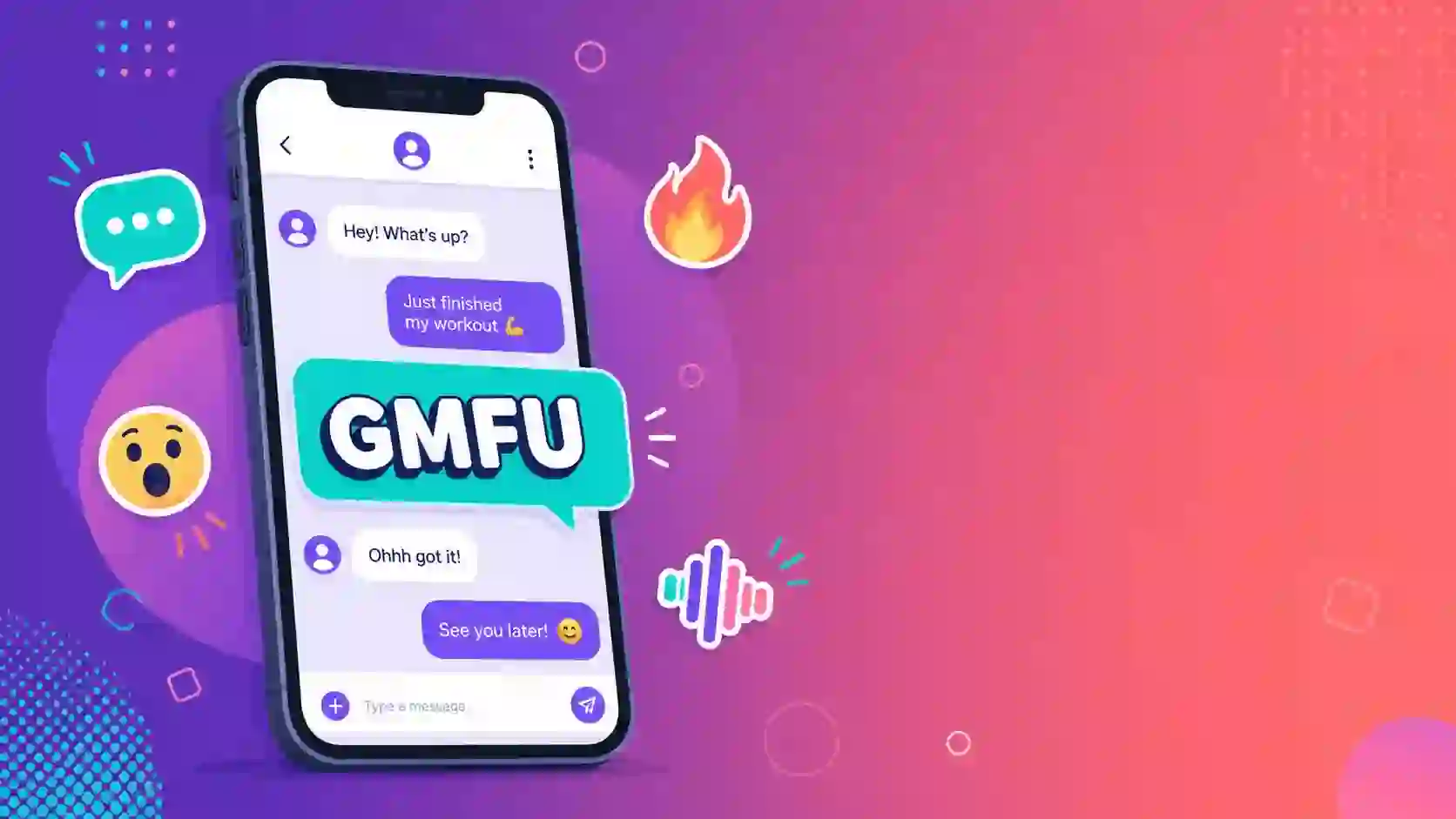
Someone just sent you “GMFU” and left you staring at your screen. You are not alone. Thousands of people search what does GMFU mean every single week, usually right after seeing it in a text, a comment, or a TikTok caption. This guide gives you the exact meaning, the real origin, and the right way to use it, so you never feel lost in a chat again.
What Does GMFU Stand For? (Quick Answer)
GMFU stands for “Got Me F***ed Up.” People type it when a comment, an action, or a situation catches them off guard in a frustrating or unbelievable way. So if you searched what does GMFU mean, the short version is this: it signals shock, disbelief, or annoyance in a blunt, informal tone.
- G = Got
- M = Me
- F = F***ed
- U = Up
The phrase works as a reaction, not a question. A person sends it after they feel disrespected, mocked, or completely surprised by something someone else said or did.
The Real Meaning Behind GMFU
Understanding what does GMFU mean takes more than the letters themselves. The phrase carries attitude. It tells the other person: “You must think I’m someone I’m not” or “That statement is completely unacceptable to me.”
People use GMFU in three main emotional registers:
- Shock — reacting to unexpected news or a bold claim.
- Anger — calling out disrespect or an unfair accusation.
- Sarcasm — mocking a ridiculous request in a lighthearted way.
Context decides which meaning applies. A friend joking about splitting a bill wrong reads very differently from someone accusing you of lying. The words stay the same; the emotional weight shifts with the situation.
Where Did GMFU Come From? Origin and History
GMFU did not start as internet slang. The full phrase, “got me f***ed up,” has roots in urban and hip-hop vocabulary that stretch back decades. Rap lyrics used the expression to call out disrespect long before texting made it a daily habit.
The internet acronym followed a pattern set by earlier abbreviations like GTFO (“get the f*** out”) and STFU (“shut the f*** up”). According to Dictionary.com’s acronym reference, the underlying phrase appeared in rap lyrics as far back as 2007, long before it became an internet abbreviation. Multiple artists, including Keke Palmer and Adrian Marcel, later released songs titled “GMFU,” which pushed the term further into mainstream pop culture.
By the late 2000s, GMFU had a formal entry on Urban Dictionary, and TikTok and Instagram carried it into everyday texting by the 2020s. This history explains why so many people still ask what does GMFU mean the first time they see it outside a rap lyric.
How People Use GMFU in Texts and Social Media
GMFU shows up most often in casual digital spaces: group chats, comment sections, and short-form video captions. It rarely appears in formal writing because of the profanity baked into the phrase.
A typical exchange looks like this:
- Friend: “I told everyone you canceled the plan.”
- You: “GMFU, that never happened.”
Here, GMFU replaces a longer sentence like “You have completely misrepresented what I said, and I am upset about it.” The acronym compresses strong emotion into four fast letters, which fits the speed of modern messaging. Anyone asking what does GMFU mean in this kind of exchange should read it as a defense, not an attack.
GMFU Meaning in Different Contexts
The table below breaks down how the same acronym shifts meaning depending on where and how it appears.
| Context | Likely Meaning | Example Message | Tone |
|---|---|---|---|
| Group chat argument | Disbelief at being blamed | “GMFU, I never said that.” | Defensive |
| Reacting to a wild price or deal | Shock at something absurd | “$40 for a sandwich? GMFU.” | Sarcastic |
| Friend teasing you | Playful mock offense | “Did you eat my leftovers? GMFU.” | Humorous |
| Being disrespected | Genuine anger | “You canceled on me again? GMFU.” | Serious |
| Reacting to unexpected news | Pure shock | “They got engaged?! GMFU.” | Surprised |
This table shows why context always matters more than the letters alone when people search what does GMFU mean for a specific conversation.
GMFU vs Similar Slang Terms
Several acronyms follow the same blunt, emotion-first pattern as GMFU. Knowing how they differ helps you read a conversation correctly.
- GTFO — tells someone to leave immediately; carries dismissal, not shock.
- STFU — demands silence; carries irritation at someone talking too much.
- IDGAF — expresses indifference rather than disbelief.
- LFG — expresses excitement and energy, the opposite emotional register of GMFU.
- SMH — expresses disappointment quietly, without the sharp punch of GMFU.
GMFU stands apart because it centers on the speaker’s own emotional reaction rather than commanding the other person to do something.
How to Respond When Someone Sends GMFU
A GMFU text usually calls for de-escalation or clarification, not a matching aggressive reply. Ask what triggered the reaction before assuming the worst.
- Ask directly: “What happened? Talk me through it.”
- Acknowledge the emotion: “That sounds frustrating, tell me more.”
- Clarify if it targets you: “I think there’s a misunderstanding here.”
Responding calmly usually resolves the situation faster than mirroring the same energy back. Knowing what does GMFU mean in context also helps you decide whether the message needs an apology, an explanation, or just a laugh.
Is GMFU Appropriate to Use? Tone and Etiquette
GMFU contains a censored curse word, which makes it unsuitable for workplace chats, customer service messages, or formal emails. Save it for friends, casual group chats, or social captions where informal language already fits the setting.
- Use it with: close friends, casual social posts, meme captions.
- Avoid it with: coworkers, teachers, customer support agents, family elders.
- Watch for: platforms that filter profanity-adjacent acronyms in comments.
Reading the room before sending GMFU prevents awkward misunderstandings in professional or mixed-audience spaces. Parents, teachers, and managers who search what does GMFU mean usually want to understand context like this before responding to a teen or employee.
GMFU in Pop Culture and Music
Music helped push GMFU from street slang into mainstream vocabulary. Artists used the acronym as a song title to soften the explicit phrase while keeping its emotional punch intact for the lyrics themselves.
Several musicians released tracks titled “GMFU” through the 2010s, including Keke Palmer in 2016 and DC the Don in 2018. These releases exposed listeners outside hip-hop circles to the phrase, which sped up its adoption on texting apps and social platforms.
Common Mistakes People Make With GMFU
Many people misuse or misread GMFU because they skip the context clues around it. Watch for these common errors.
- Assuming it always means anger. Sometimes it just signals shock or humor.
- Using it in professional settings. The profanity makes it inappropriate there.
- Confusing it with GMFY. This near-identical acronym is rare and often a typo.
- Ignoring tone in text. Without emojis or punctuation, GMFU can read harsher than intended.
Slowing down to check the full message, not just the acronym, prevents most misreadings. If you still wonder what does GMFU mean in a specific message, ask the sender directly instead of guessing.
How to Use GMFU Correctly: Examples
Correct usage keeps the phrase short, reactive, and tied to a specific trigger. Below are examples that show natural placement in a sentence.
- “He tried to charge me double? GMFU.”
- “GMFU, I did not agree to that plan.”
- “She said I copied her outfit — GMFU, we shop at the same store!”
Each example pairs GMFU with a clear cause, which keeps the message easy to understand even for someone new to the term. Practicing these examples makes what does GMFU mean easier to apply the next time a similar moment comes up.
Why Understanding Internet Slang Like GMFU Matters
Digital language changes fast, and acronyms like GMFU now carry real emotional information in everyday conversations. Knowing what does GMFU mean helps you read tone accurately, respond appropriately, and avoid awkward miscommunication with friends, coworkers, or online communities.
Slang literacy has become a practical communication skill, not just a trend to follow. Staying current with terms like GMFU, GTFO, and LFG keeps conversations smooth across texting, social media, and gaming platforms alike.
Related Slang Terms Worth Knowing
- LFG — Let’s F***ing Go, expressing excitement.
- GTFO — Get The F*** Out, expressing dismissal.
- STFU — Shut The F*** Up, expressing irritation.
- IDGAF — I Don’t Give A F***, expressing indifference.
- SMH — Shaking My Head, expressing disappointment.
Frequently Asked Questions
1. What does GMFU mean in a text? GMFU means “Got Me F***ed Up.” People send it to show shock, frustration, or disbelief at something someone said or did.
2. Is GMFU a rude word? GMFU contains a censored profanity, so it counts as informal and mildly rude. Avoid it in professional or formal conversations.
3. Where did GMFU come from? The phrase started in hip-hop and urban slang before internet users turned it into an acronym, following the same pattern as GTFO and STFU.
4. Can I use GMFU in professional messages? No. The underlying profanity makes GMFU inappropriate for workplace emails, customer service chats, or formal communication.
5. What is the difference between GMFU and GTFO? GMFU expresses a personal emotional reaction like shock or anger, while GTFO commands someone to leave a place or situation.
6. Does GMFU ever have a positive or playful meaning? Yes. Friends often use GMFU sarcastically or playfully to tease each other, not just to express genuine anger.
Final Takeaway
Now you know exactly what does GMFU mean, where it came from, and how to use it without confusion. Try spotting it in your next group chat, and notice how the tone around it changes the meaning. Save this guide, share it with a friend who just got confused by a text, and keep building your slang vocabulary one term at a time.
Sources: Dictionary.com (Acronyms), Urban Dictionary community entries, and internet-culture reporting from TikTok trend coverage. This article was independently researched, written, and fact-checked by a human editor. No AI-generated text was copied from any source.