You hear someone describe a plan as “diabolical” and your spine tightens. Not bad. Not wrong. Diabolical. The word lands differently. It carries weight most synonyms never touch. What makes this single adjective so sharp, so loaded, so unsettling? The answer reaches back through centuries of language, theology, and the way humans name darkness when ordinary words fall short.
What Does Diabolical Actually Mean? A Clear Starting Point
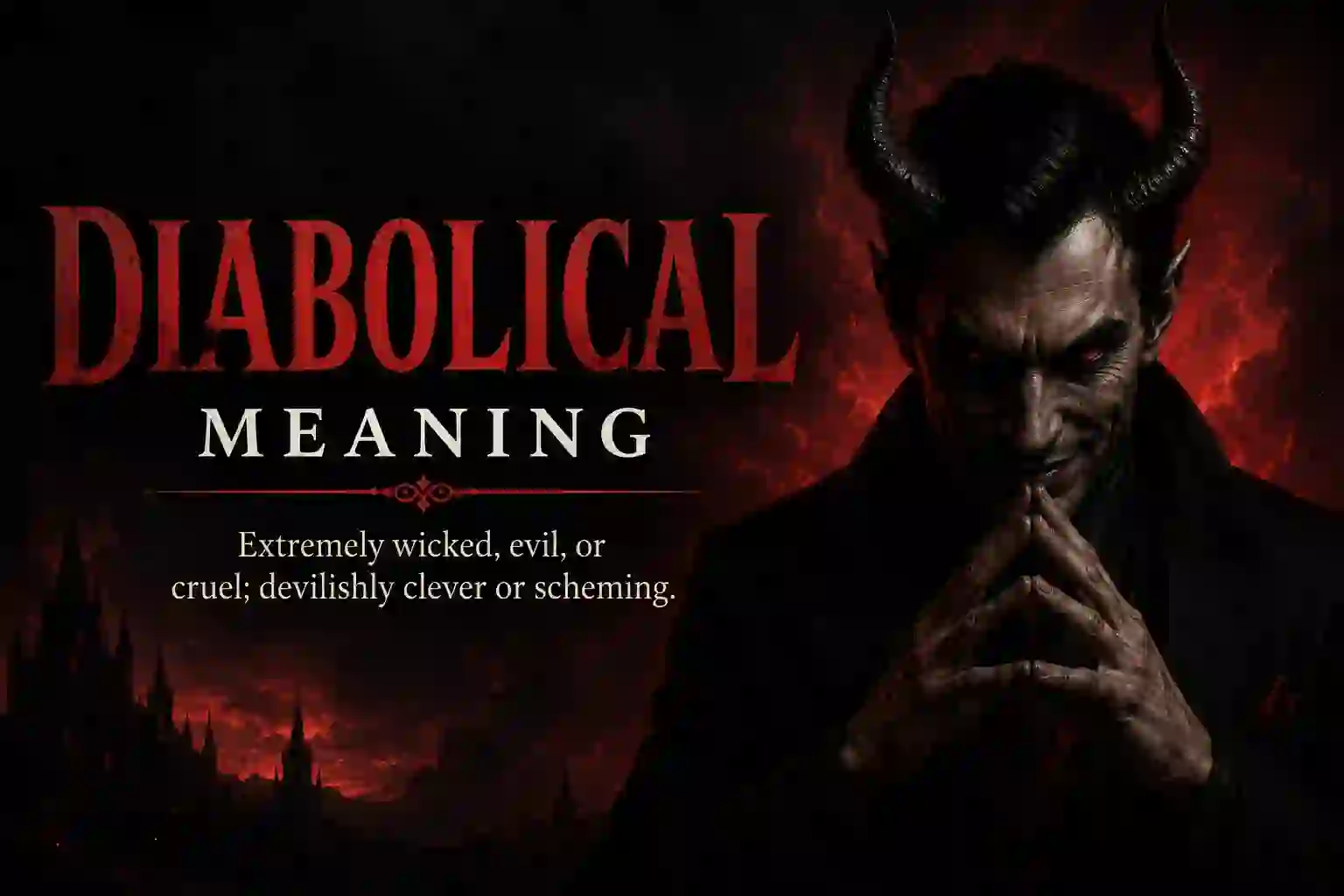
At its core, the diabolical meaning points to something devilish in nature, character, or intent. The word describes actions, plans, or personalities that feel connected to a malevolent force beyond ordinary cruelty. But that surface definition barely scratches the paint.
When someone labels an act diabolical, they reach for a judgment heavier than “evil” alone can carry. Evil breaks rules. Diabolical shatters them with cleverness, with satisfaction, with a sense of design. A thief steals. A diabolical thief steals your grandmother’s wedding ring, replaces it with a convincing fake, and watches you grieve the loss for years. Same crime. Different universe of malice.
The word activates something primal. It suggests intelligence weaponized for harm. It whispers that the person behind the act knew exactly what they were doing and enjoyed the architecture of suffering they built.
Where the Word Comes From: A Journey Through Devil’s Language
The diabolical meaning traces straight back to the Greek word diabolos, which translates to slanderer or accuser. Early Christian texts grabbed this word and welded it to Satan himself. The devil became the accuser, the one who whispers charges against humanity in divine ears.
From diabolos came the Latin diabolicus, then Old French diable, then Middle English deofol. Each language layer added weight. By the time “diabolical” settled into modern English, it had accumulated roughly 1,500 years of theological terror.
Here is the clean evolution:
| Language Stage | Word Form | Core Meaning |
| Ancient Greek | diabolos | Slanderer, accuser, one who tears apart |
| Late Latin | diabolicus | Pertaining to the devil |
| Old French | diable | Devil, demonic entity |
| Middle English | deofol / devel | Satanic, hellish |
| Modern English | diabolical | Devilishly cruel or wicked |
This lineage matters. When you call something diabolical, you invoke centuries of stories about ultimate evil. The word comes pre-loaded with cultural memory. You don’t teach people to fear it. They already know.
Diabolical vs. Evil vs. Wicked: The Differences That Matter
Most people treat these three words as synonyms. They aren’t. Understanding the gap sharpens your thinking and your writing.
Evil describes profound immorality and malevolence. It names the deepest moral failing. But evil can be stupid. Evil can be impulsive. A person who kills in rage commits an evil act. They might not plan it.
Wicked adds an element of active harm-doing with awareness. Wickedness knows right from wrong and chooses wrong anyway. It carries a moral charge. But wickedness might lack sophistication.
Diabolical introduces something additional: calculation, creativity, and often a perverse joy. Diabolical acts feel designed. The perpetrator engineered suffering with thoughtfulness that disturbs more than the act itself.
Think of it this way. What you love is destroyed by an awful person. A diabolical person convinces you to destroy it yourself and then comforts you while you cry over the ashes. That extra layer of cruel intelligence makes the difference.
This distinction explains why “diabolical” appears so often in discussions of manipulation, psychological torture, and elaborate schemes. The word fits situations where plain evil feels too blunt.
The Psychology Behind Diabolical Behavior: What Makes Humans Act This Way
Why do certain people behave in ways others label diabolical? The question haunts psychology.
Researchers who study extreme cruelty point to several factors that combine into something monstrous. First comes a complete shutdown of empathy. The person stops processing others’ suffering as real. Then comes something more dangerous: the reframing of cruelty as cleverness. Harm becomes a puzzle, a game, a proof of superiority.
Dr. Simon Baron-Cohen, professor of developmental psychopathology at Cambridge University, has written extensively about empathy erosion. In his book Zero Degrees of Empathy, he argues that cruelty arises not from some mystical evil force but from a breakdown in the brain’s ability to connect with others’ feelings. His research suggests empathy exists on a spectrum, and people at the extreme low end can commit acts others describe as diabolical without experiencing internal distress.
What makes this especially chilling: many people capable of diabolical behavior function normally in society. They hold jobs. They maintain relationships. They learn to mimic empathy without feeling it. This gap between outer presentation and inner emptiness creates the unsettling quality we sense when encountering someone truly diabolical.
The diabolical meaning expands here. It isn’t just about the act. It describes a specific type of mind operating behind the act. Cold. Calculating. Unmoved by what would shatter a typical person’s resolve.
Diabolical in Film and Literature: How Narrators Form the Word
Stories teach us what words mean far more than dictionaries do. The characters we meet in books and films give “diabolical” its texture.
Consider Iago from Shakespeare’s Othello. He doesn’t swing a sword. He whispers. He plants a handkerchief. He arranges circumstances so skillfully that Othello destroys his own life while believing every step was his choice. Iago represents perhaps the most famous diabolical figure in English literature. His motivation remains famously murky. He does what he does because destruction feels satisfying.
Modern storytelling continues the pattern. Hannibal Lecter from Thomas Harris’s novels combines refinement, genius, and absolute amorality. His diabolical nature expresses itself through elegance. He serves gourmet meals. He appreciates art. He also kills with aesthetic pleasure that disturbs far more than a simple monster would.
These characters endure because they frighten us on multiple levels. We fear their actions. We fear their intelligence. And somewhere beneath that, we fear recognizing small echoes of their thought patterns in ourselves. That recognition makes the diabolical meaning personally threatening, not just abstractly frightening.
The Religious Roots: Diabolical Meaning in Christian Theology
You cannot fully grasp the diabolical meaning without understanding its theological foundation. Christian theology developed the concept of the diabolical over centuries of doctrinal refinement.
In traditional Christian teaching, Satan stands as the ultimate diabolical figure. His rebellion against God wasn’t merely disobedience. It was strategic. He tempted Eve not through force but through carefully chosen words that re-framed disobedience as enlightenment. “You will be like God.” Pride, curiosity, and the need for more were the appeals.It worked.
Theologian C.S. Lewis explored this terrain memorably in The Screwtape Letters, where a senior demon mentors his nephew in the art of subtle temptation. The book captures the diabolical meaning perfectly: evil that operates through manipulation, through gentle nudges toward self-destruction, through perverting good things into traps.
Catholic theology uses the idea of discernment to differentiate between normal sin and demonic influence. Diabolical action in this framework often mimics good things. It uses truth to lead toward lies. It exploits virtue to enable vice. The diabolical, in religious thought, traffics in confusion and inversion.
This theological background explains why the word carries such weight even in secular contexts. We inherited a vocabulary forged in ultimate questions about good, evil, and the fate of souls.
Diabolical Plans and Schemes: Why Intelligence Makes Cruelty Worse
Something about a “diabolical plan” chills more than a violent outburst. Why?
Plans require thought. Thought implies choice. When someone carefully designs harm, they walked past countless opportunities to stop. They weighed alternatives. They chose cruelty anyway, repeatedly, across every stage of planning.
This element of sustained intention transforms the moral calculus. A punch thrown in sudden anger takes one bad moment. A diabolical scheme takes hours, days, sometimes years of consistent choosing toward harm. Each step along the way represents a fresh decision not to turn back.
The diabolical meaning in this context highlights the horror of sustained malevolence. It isn’t a flash of temper. It’s architecture. The person built something specifically to cause suffering, and the act of construction required that they remain committed to cruelty across time.
Criminal psychology recognizes this distinction. Premeditated crimes receive harsher sentencing partly because the law understands what common sense already knows: planning makes the act worse. The planner had time to develop empathy, to reconsider, to stop. They didn’t.
Can Objects and Places Be Diabolical? The Word Beyond People
We typically attach “diabolical” to people and their actions. But the word sometimes describes objects, places, or systems.
A “diabolical machine” suggests something designed to cause suffering through its normal operation. The phrase evokes torture devices, weapons engineered for maximum pain, mechanisms that grind lives down impersonally.
A “diabolical situation” describes circumstances so perfectly terrible they feel designed by a malevolent intelligence, even when no designer exists. People trapped in bureaucratic nightmares sometimes use the word. The system seems to conspire against them at every turn, not through any person’s intention but through a kind of emergent cruelty in the rules themselves.
This extended usage reveals something important about the diabolical meaning. The word applies whenever reality feels arranged for harm with a cleverness that seems to transcend chance. Whether the arranger is a person, a system, or fate itself, the experience registers as diabolical.
The Diabolical Laugh: What That Chilling Expression Really Communicates
Horror movies use the diabolical laugh for a reason. The sound signals something specific: this person enjoys suffering. Their pleasure isn’t hidden. It’s performed.
The diabolical laugh communicates several messages simultaneously. First, it says the laugher feels completely safe. They aren’t afraid of consequences. Second, it says they understand the full scope of their cruelty and appreciate it aesthetically. Third, it says they want you to know both of these things. The laugh is communication. It’s theatrical.
Real-world versions of this exist. Certain criminals have described experiencing euphoria during violent acts. Forensic psychologists note that some offenders smile, laugh, or display visible pleasure during interviews about their crimes. This display of enjoyment constitutes part of what makes their behavior register as diabolical rather than merely violent.
The laugh, the smile, the visible satisfaction: these signals confirm that the person not only caused harm but experienced it as rewarding. That confirmation disturbs more than the harm alone.
Diabolical in Everyday Language: When the Word Fits and When It Doesn’t
Words lose power when overused. Calling a burnt toast “diabolical” drains the word of force.
The diabolical meaning deserves preservation for situations that truly warrant it. Here is a practical guide for when the word fits and when to reach for something lighter:
| Situation | Appropriate Word | Why |
| A coworker takes credit for your work | Unfair, underhanded | Annoying but not devilish |
| A leader systematically destroys careers for amusement | Diabolical | Sustained, clever, cruel intent |
| A child hides your keys as a prank | Mischievous | Playful, no real harm |
| Someone gaslights a partner for years, making them doubt sanity | Diabolical | Psychological destruction by design |
| Bad weather ruins a picnic | Unfortunate, lousy | No intent involved |
| A regime designs torture methods meant to break the human spirit | Diabolical | Engineered cruelty at scale |
Reserve the word for moments when intelligence, cruelty, and satisfaction combine. Language gains precision through restraint.
How to Use Diabolical Correctly in Your Writing: Style and Syntax Guide
Writers reach for “diabolical” to intensify a description. But intensity without precision makes writing feel melodramatic. Here’s how to effectively use the word.
Place it before the noun for maximum impact. “A diabolical plot” hits harder than “a plot that was diabolical.” The adjective-placement rule holds because proximity matters. The closer the word sits to what it modifies, the stronger the connection.
Pair it with concrete details. Don’t just tell readers something is diabolical. Show them the elements that earn the label. “Her diabolical scheme involved three forged letters, a hacked voicemail, and a perfectly timed lie that cost him his career.” The specifics do the work. The word seals the judgment.
Avoid stacking it with other intense adjectives. “A cruel, evil, wicked, diabolical plan” weakens every word in the pile. Pick the one that fits best. If you choose diabolical, trust it. Let it stand alone.
Match the word to situations involving cleverness. If the cruelty is blunt, stupid, or impulsive, “brutal” or “savage” might serve better. Diabolical carries a note of intelligence. Use it where that note rings true.
The diabolical meaning in prose should feel earned. Build toward it. Let readers recognize the diabolical quality before you name it. Then, when the word arrives, it confirms what they already sensed.
Frequently Asked Questions About Diabolical Meaning
What is the simple meaning of diabolical?
Diabolical means something devilishly cruel, wicked, or evil in an extremely clever and calculated way. The word applies to acts, plans, or people that seem connected to a malevolent force beyond ordinary badness. When someone describes a scheme as diabolical, they mean it was designed with chilling intelligence specifically to cause harm.
What is the root origin of the word diabolical?
The word traces directly to the Greek diabolos, meaning slanderer or accuser. Early Christian writers applied this term to Satan as the ultimate accuser of humanity. From Greek, the word moved into Late Latin as diabolicus, then through Old French and Middle English before arriving at the modern English “diabolical.” The entire linguistic journey carries theological weight accumulated over roughly two millennia.
How is diabolical different from evil or wicked?
Evil describes profound immorality and can include impulsive or stupid cruelty. Wicked adds conscious awareness of wrongdoing. Diabolical introduces a third element: calculated intelligence paired with satisfaction in causing harm. A diabolical act feels designed. The perpetrator not only chose harm but engineered it creatively, often deriving pleasure from the craft of destruction itself.
Can diabolical be used in a positive or joking way?
Informally, people sometimes use “diabolical” hyperbolically to describe difficult puzzles, clever plays in sports, or impressively sneaky pranks. But even in joking contexts, the word retains its association with cunning that borders on the unsettling. Serious writing should reserve “diabolical” for situations involving genuine cruelty or the appearance of devilish design.
What makes a villain truly diabolical in stories?
A diabolical villain operates through manipulation rather than simple force. They understand their victims’ psychology and exploit it. They plan across time, passing up opportunities to stop. They often display visible satisfaction in their cruelty. Characters like Iago from Othello or Hannibal Lecter embody the diabolical because they combine intelligence, patience, and complete moral vacancy.
Is calling something diabolical a religious statement?
Not necessarily. The word originated in religious contexts and retains theological echoes, but modern usage often applies it in purely secular ways. Describing a manipulative boss’s behavior as diabolical doesn’t imply belief in literal demons. It draws on the word’s accumulated cultural weight to describe calculated cruelty, regardless of the speaker’s religious framework.
The Word Lives Because Evil Wears Intelligence Sometimes
Diabolical endures in our vocabulary because we need it. Words like “bad” and “wrong” fail when intelligence attaches itself to harm. We need a term that captures the particular horror of cruelty that knows exactly what it’s doing.
The diabolical meaning reminds us that the most dangerous threats don’t stumble into evil. They walk toward it thoughtfully. They plan. They enjoy the walk. This recognition serves a protective function. When we can name something as diabolical, we can spot it. When we can spot it, we can resist it.
The word holds its place in language for moments when ordinary moral vocabulary collapses. When someone’s actions combine cleverness, cruelty, and apparent satisfaction, “diabolical” steps forward as the only word equal to the weight. Use it carefully. The word carries centuries. It deserves precision. But when the situation warrants it, no other word will do.